Saunas and ice baths in Cimahi for compact homes
A sauna Cimahi is almost always designed backwards from the space available — tight plots, terraced housing, shared walls. We talk people down from a 9 kW dry sauna far more often than we talk them up.
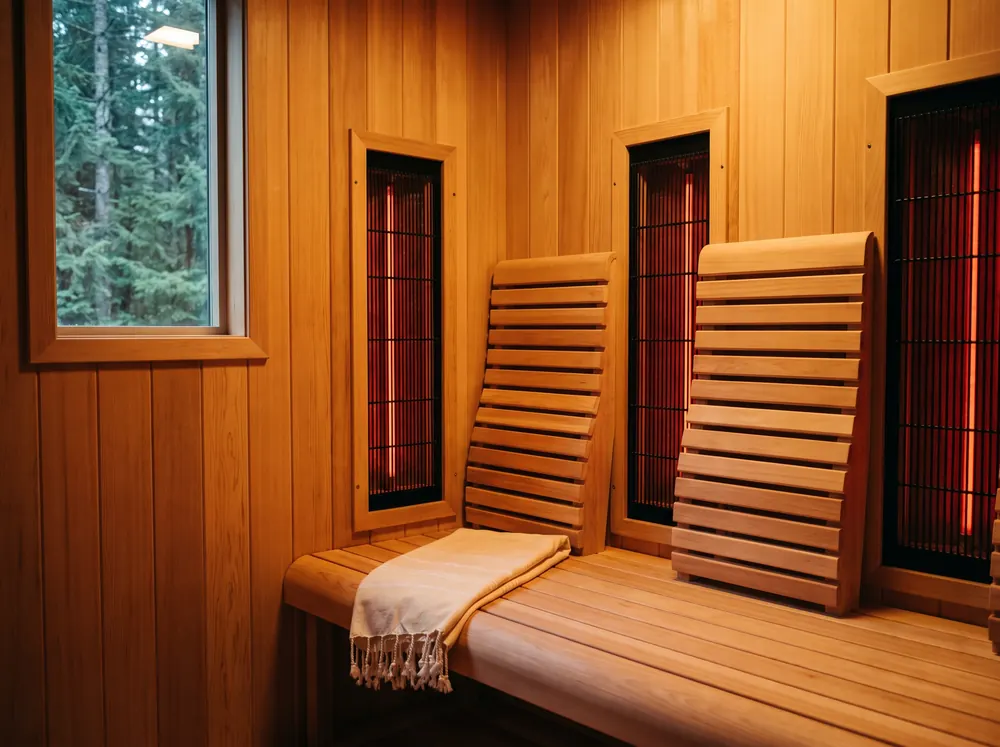
A sauna Cimahi is a space problem before it is a taste problem
Cimahi is a satellite city: dense estates, terraced housing, plots tighter than most of Bandung proper. The consequence is blunt — small footprints win. The conversation we have most often here is talking someone down from a 9 kW dry sauna to something that actually fits, and we would rather say it in the first minute than quote a cabin that eats half the drying yard. Refusing to sell the oversized unit is part of the job, not politeness.
Stop measuring by floor area. Measure volume — and watch your ceiling height
This is the expensive mistake here. People send us 1.5 × 2 m and ask how many it seats. But a heater does not heat the floor, it heats the air: volume. Terraced ceilings are often low, and that works in your favour — a 2 m ceiling needs a smaller heater than the same floor area at 2.4 m. Send length, width and height, plus where the door and window go. The heater size falls out of that, usually smaller than you expected and cheaper to run every night.
Infrared wins here because it never touches your PLN supply
In estate housing the supply is what it is: raising it means your subscription and a panel that is already full. An infrared sauna at 1.8–3 kW, 45–60°C, runs off the 220V already in the wall and starts at Rp 42.000.000. A dry sauna starts at Rp 68.000.000, but its 6–9 kW heater almost always demands a dedicated line. That is why Cimahi has the most lopsided infrared-to-dry-sauna ratio of anywhere we install. An ice bath chiller at 0.5–1 HP also runs on standard 220V, so an ice bath from Rp 38.000.000 is rarely a power problem here. Its problem is the next paragraph.
Party walls: your chiller is your neighbour's problem
Terraced housing means shared walls, and a chiller compressor cycles on and off through the night. Mounting it on a wall with someone's bedroom behind it is the fastest way to turn your wellness area into a dispute with the neighbours. So plant placement is a design decision, not something the installer improvises on the last day: an unshared external wall, anti-vibration mounts, real service clearance, and if needed a schedule so the chiller is not pulling temperature down at midnight. On a generous plot you can ignore this. In Cimahi you cannot.
Neighbours: Setiabudi east, Padalarang west
Setiabudi means established houses with old electrical panels — a similar constraint on a roomier plot. Padalarang means newer estates, where services can still be buried while the building goes up, the cheapest moment to add a wellness area. Cimahi sits between them and is the warmest of the lot: roughly 700 m, nights of 19–21°C. An outdoor rest zone stays comfortable without air conditioning, but a chiller here works slightly harder than it would higher up to hold 2–8°C. Not a blocker — just a number we size for at the start, not after the first bill.
What we build in Cimahi
- Dry Sauna in Cimahi — Rp 68.000.000
- Infrared Sauna in Cimahi — Rp 42.000.000
- Ice Bath / Cold Plunge in Cimahi — Rp 38.000.000
- Steam Room / Hammam in Cimahi — Rp 55.000.000
- Outdoor Barrel Sauna in Cimahi — Rp 75.000.000
- Complete Wellness Area in Cimahi — Rp 145.000.000
Frequently asked questions
My plot is small. What is a sensible minimum sauna size?
Do not start from floor area — start from volume and ceiling height, because that is what sets the heater. Send us length × width × height. In terraced housing a low ceiling is an advantage: smaller heater, cheaper to run.
Is an ice bath chiller noisy? I share a wall with my neighbour.
The compressor cycles, and through a shared wall you hear it. We do not mount the unit on a party wall: we find an external wall, use anti-vibration mounts and leave service clearance. If there is no wall choice, the chiller can be scheduled so it is not pulling temperature down while people are asleep.
Why do you keep recommending infrared over a dry sauna in Cimahi?
Because the supply in estate housing is what it is. Infrared at 1.8–3 kW runs off the existing 220V; a 6–9 kW dry sauna almost always needs a dedicated line and a supply upgrade. If your power and space genuinely allow it, we will still tell you a dry sauna feels different at 80–95°C.
Does an ice bath in Cimahi need a bigger chiller?
It works slightly harder than one higher up — roughly 700 m with nights of 19–21°C means warmer incoming water. For a home tub, 0.5–1 HP on 220V still holds 2–8°C; what changes is pull-down time, not the class of unit. Before starting cold exposure, check with a doctor if there is pregnancy, a heart condition, uncontrolled blood pressure or epilepsy.
Nearby areas
Free survey in Cimahi
We come to your place in Bandung, measure, check the power, and tell you what's possible and what isn't. No cost, no obligation.