There is no ideal ice bath temperature — there is a dose
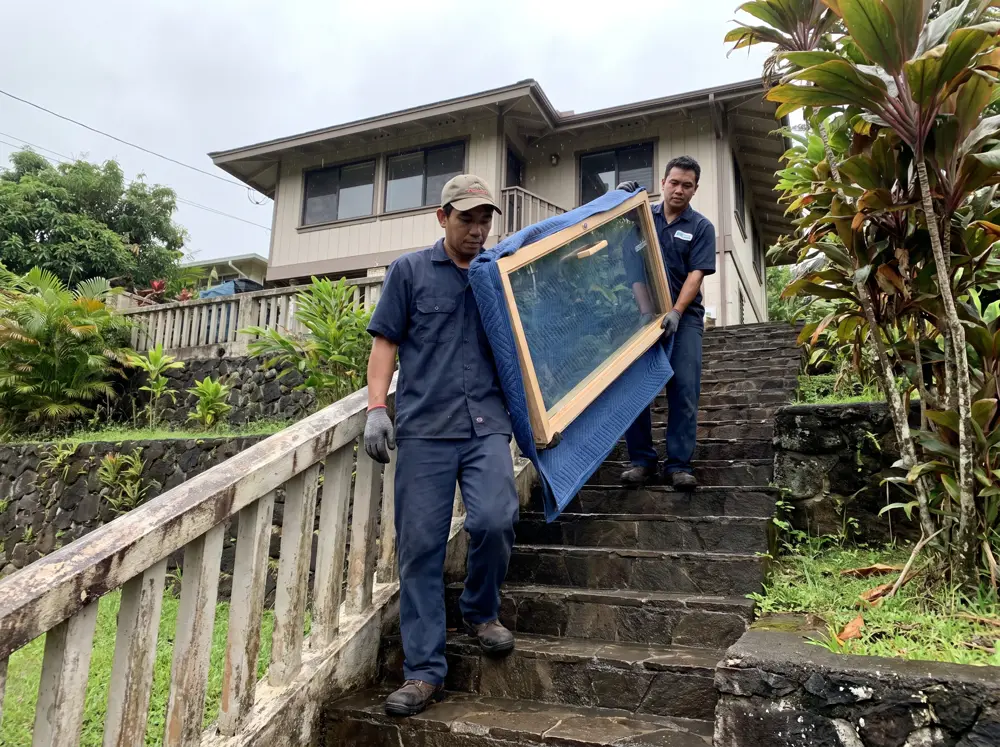
A client in Dago sent us a video: 40 kg of block ice tipped into a tub, thermometer reading 5°C, he gets in, and eight minutes later the same thermometer reads 11°C. His question was whether the gauge had failed. It hadn't. That is ordinary physics, and it is exactly why the question of the ideal ice bath temperature is nearly always answered with a single number when a single number cannot answer it. There is no ideal temperature. There is a dose.
The ideal ice bath temperature is always three variables, never one
Cold dose is made of three things that trade against each other:
- Water temperature — how big the gap is between the water and your skin.
- Duration — how long that gap is allowed to do its work.
- Adaptation — how much cold exposure your body has already processed.
Move one and the others have to move. Drop the temperature and you must cut the duration. Extend the duration and you need warmer water. A beginner at 12°C for six minutes and a year-deep regular at 5°C for two minutes are buying roughly the same dose by different routes.
Which is why the numbers people post online mean almost nothing. "Two degrees" without a duration and without an adaptation context is half a sentence. We are interested in a far more boring and far more useful question: what dose can you repeat three times this week without starting to avoid it?
The ladder we actually use
This is not theory. These are the ranges we set on the units we have installed over the past three years, ordered from the friendliest to the one we argue against.
12–15°C — your first two to four weeks. If you have never done this, 14°C already feels brutal. Good. The goal of this phase is not performance, it is one skill: keeping your breathing slow while your nervous system tells you to get out. Once your breath is still long at minute two, you have earned the step down.
8–12°C — the working zone. This is where most of our regular clients live, and most of them never leave. Water at 10°C is cold enough to trigger what people come for — vasoconstriction, a spike in heart rate, then that oddly level calm afterwards — while staying friendly enough to repeat three times a week without it becoming an event.
3–8°C — experienced. We set this range for clients who have been consistent for at least three months. At 5°C, two minutes runs longer than six minutes at 12°C ever did. It is also the factory setting on the units we build: our ice baths ship configured for 2–8°C.
Below 3°C — we advise against it. There is no strong evidence that 1°C delivers anything extra over 5°C. What definitely increases is risk: a harder cold shock response, a gasp reflex that is genuinely difficult to override, and numbness arriving sooner. Numbness is the real problem, because it deletes the only instrument you have in the tub. Sub-3°C sells photographs, not outcomes.
| Water temp | Who it's for | Duration per session | Notes |
|---|---|---|---|
| 12–15°C | Beginners, first 2–4 weeks | 5–10 min | Cold enough to train the breath, forgiving enough to get it wrong |
| 8–12°C | Regular users | 3–6 min | The working zone. Most people never need to leave it |
| 5–8°C | Consistent for 3+ months | 2–4 min | Our default chiller setting |
| 3–5°C | Experienced, and not alone | 1–3 min | Time runs very slowly down here |
| <3°C | Not recommended | — | No proven added benefit; risk goes up |
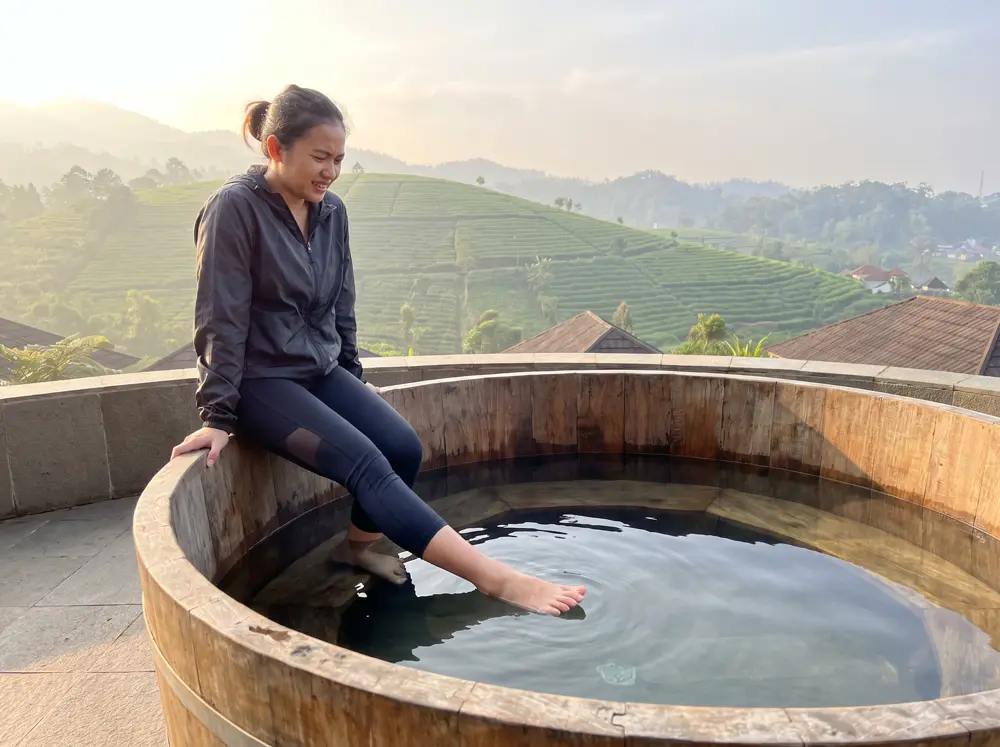
Colder is not better — it is just faster
This is the market's most expensive misunderstanding. People read the temperature scale as a benefit scale: 10°C is good, 5°C twice as good, 2°C four times as good. It does not work that way. What colder water buys you is speed — you reach the same dose in less time. That is the whole trade.
For some people speed is worth paying for: two minutes fits the morning, eight does not. For others, warmer water is the better buy, because they can stay in long enough to actually work on their breathing. Both are legitimate. What is not is assuming one is automatically superior.
Colder does not buy a bigger benefit. Colder only buys a shorter session.
A chiller holding a steady 4°C versus a pile of ice
Ice is the most expensive way to get the least consistent temperature. Three reasons, ordered by how often they are overlooked.
Drift. Back to the Dago video: 5°C at minute zero, 11°C at minute eight. Your Tuesday session is not your Thursday session even with identical ice, because ambient temperature, water volume and how long the ice has been melting all get a vote. You cannot build progression on a variable you cannot lock. A chiller holds 4°C inside roughly half a degree, session after session, without you thinking about it. If you run a hotel or a gym, that drift is not an inconvenience — it is a liability. The guest at 08:00 gets 4°C, the guest at 11:00 gets 12°C, and both were promised the same thing at check-in.
Cost per session. Run it yourself with local numbers: price of block ice near you × sessions per week × 52. Then compare the electricity bill of a 0.5–1 HP chiller running off an ordinary 220V outlet, cycling only when it needs to hold temperature. We will not invent the figures for you, but the direction is always the same, and break-even arrives sooner than most people assume. Ice is a cost that repeats forever. A chiller happens once.
Logistics — quietly the decisive one. One day the ice runs out, the shop is closed, and you skip. That is not a technical failure, it is a compliance failure — and compliance is the only variable that decides whether this tub changes anything or becomes a planter within six months. For a hotel, "someone does an ice run every morning" is a recurring staffing line nobody costed at proposal stage. A tub sitting ready at 4°C around the clock gets used. A tub that demands a trip to the market does not.
One technical point gets missed: a chiller reuses the same water, so it requires 20µm cartridge filtration plus UV or ozone. Ice looks "clean" only because you dump the water — and add fresh water, plus whatever came in on the ice, every session. We cover that side separately in our ice bath water maintenance guide.
Why the chiller maths in Bandung differs from Jakarta
Bandung sits at roughly 750 m above sea level, and that changes your starting number. In the homes we fit in Dago, Setiabudi and Lembang, tap water typically arrives somewhere around 24–26°C. In Jakarta, what comes out of the pipe tends to be warmer.
That gap sounds small, but it is the entire job. Going from 25°C to 4°C means removing 21 degrees. Going from 30°C to 4°C means removing 26 — roughly a quarter more work for exactly the same volume of water. Add Bandung evenings sitting at 18–20°C and the heat leaking back in through the tub walls overnight is much smaller too. A chiller here works lighter not only during pull-down, but across the other 23 hours when it is merely holding.
The practical consequence is real: a unit that needs 1 HP in Jakarta is often well served by 0.5 HP in Lembang. That is a difference in price, in electrical load, and in how loud your terrace is at six in the morning.
The honest caveat: starting water temperature is not the only input to sizing, and it is not the biggest. Tub volume, insulation quality, whether there is a lid, and how often that lid gets opened all matter more. A 400-litre tub with no lid on an open terrace will beat any chiller, in any city. Insulation is always cheaper than refrigeration.
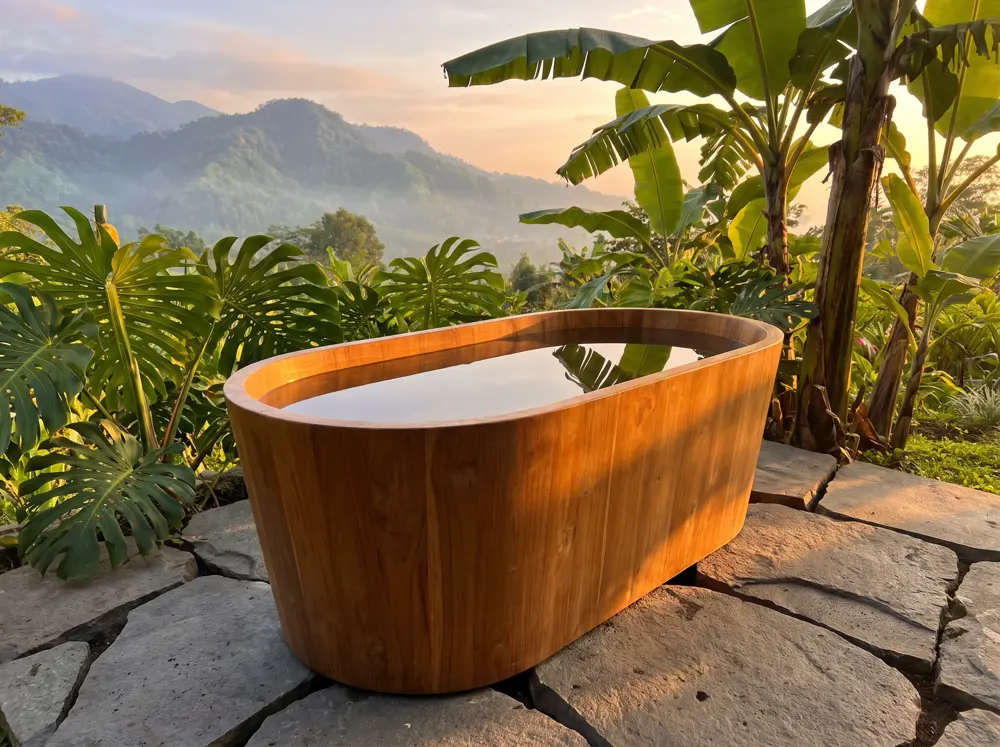
Cold exposure is not for everyone. Talk to a doctor first if you are pregnant, have a heart condition, uncontrolled blood pressure, or epilepsy — and ideally before beginning cold exposure at all. Never plunge alone, and never after alcohol. Research on cold exposure points in interesting directions but is not settled; we do not sell it as medicine.
How to pick your number this week
The simplest protocol we give new clients: set 14°C, do three sessions in one week, each running to eight minutes or until your breathing goes ragged — whichever comes first. If your breath is still long at minute two on the third session, drop two degrees. Repeat. Most people settle naturally somewhere between 8 and 12°C, and there is nothing wrong with stopping there permanently.
Pair it with a sauna and the ordering changes again — heat dramatically alters how the body reads cold, which we cover in our contrast therapy guide. If you are still weighing whether cold exposure is worth it at all, start with what an ice bath actually does rather than with a thermometer.
We build ice baths in our own Bandung workshop, from Rp 38,000,000, with the chiller, filtration and sanitation designed as one system rather than three products that happen to sit near each other. Full ranges are on the pricing page, and site surveys inside Bandung are free: send us your terrace dimensions and we will reply with numbers, not a brochure.
Frequently asked questions
What is the ideal ice bath temperature for beginners?
Start at 12-15°C, not 5°C. That range already feels extremely cold to anyone new, but it leaves you enough room to learn breath control instead of going straight into panic. After two to four weeks, drop two degrees each time you can breathe calmly at minute two.
How long should you stay in an ice bath?
Duration is tied to temperature, so there is no single answer. At 12-15°C, 5-10 minutes is reasonable; at 8-12°C, 3-6 minutes; at 3-8°C, 1-4 minutes is plenty. Ragged breathing or numb hands is a signal to get out, not a signal to tough it out.
Is a colder ice bath better?
There is no strong evidence that going below 3°C adds anything over 5°C, while the risk clearly rises: a harder cold shock response and numbness arriving sooner. Colder water simply shortens the session needed for the same dose. We configure our units for 2-8°C and do not recommend going lower.
Do I need a chiller, or is ice enough?
Ice gives you a temperature that drifts through the session, a cost that repeats every time, and a shopping obligation that eventually makes you skip. A 0.5-1 HP chiller holds a stable temperature off a standard 220V outlet and is paid for once. For a handful of experiments ice is fine; for a routine, or for any hotel or gym, the chiller wins outright.
Is an ice bath safe for everyone?
No. Consult a doctor first if you are pregnant, have a heart condition, uncontrolled blood pressure, or epilepsy, and ideally before starting cold exposure at all. Never plunge alone and never after drinking alcohol.
Information on this site is educational and is not medical advice. Consult a doctor before starting heat or cold therapy.
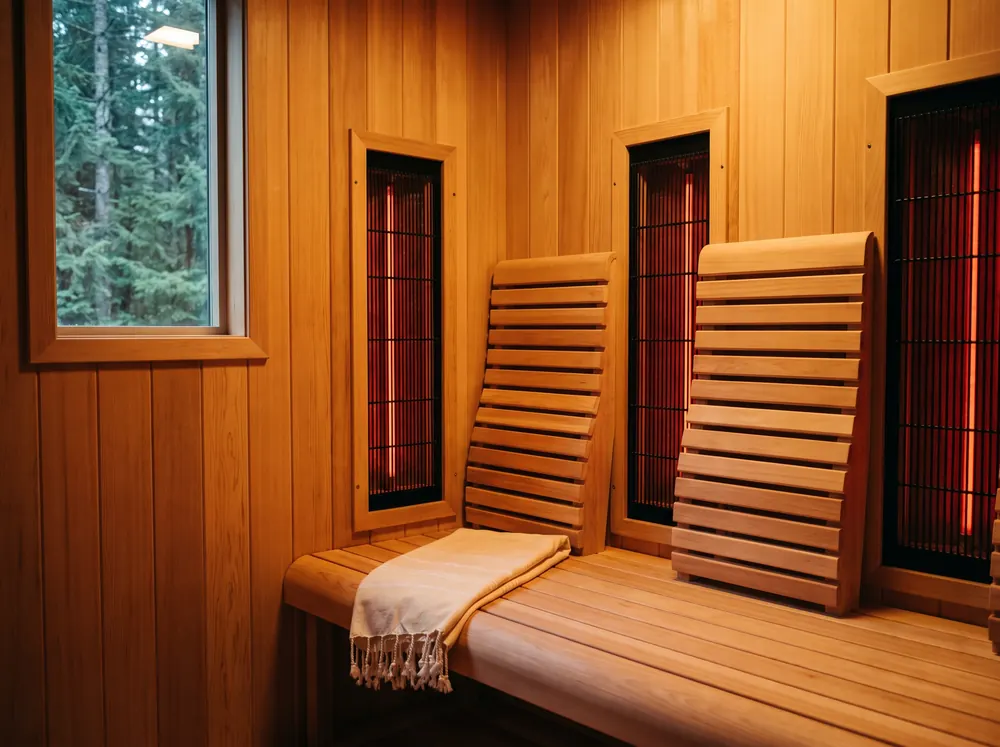
Infrared vs traditional sauna: one heats you, the other heats the room
Infrared isn't a cheap Finnish sauna. It's a different machine — and in a Bandung house, the electricity meter usually decides for you.
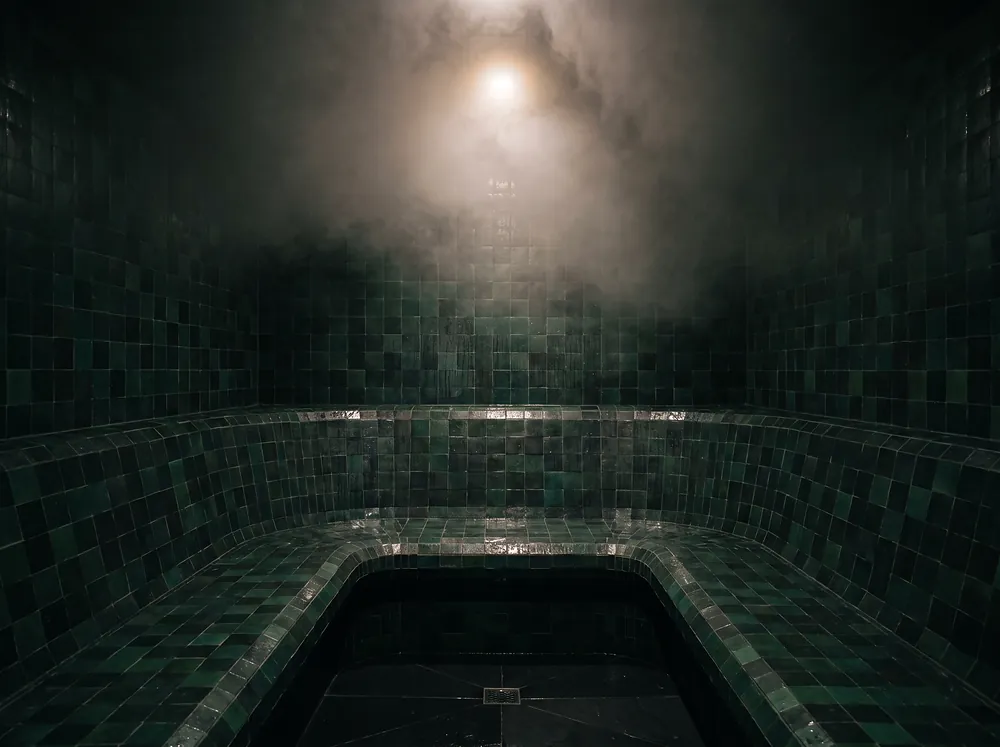
Dry sauna vs steam room: why 45°C wet is harder than 90°C dry
It was never about the temperature. The difference is whether your sweat still has anywhere to go — and the entire building follows from that.
Ice bath benefits: what's real, what's argued about, what's oversold
The first thirty seconds are a reflex you cannot negotiate with. The most reliable effect arrives twenty minutes after you get out.
Start with a free survey
We come to your place in Bandung, measure, check the power, and tell you what's possible and what isn't. No cost, no obligation.