Ice bath for athletes: the temperature is not the hard part
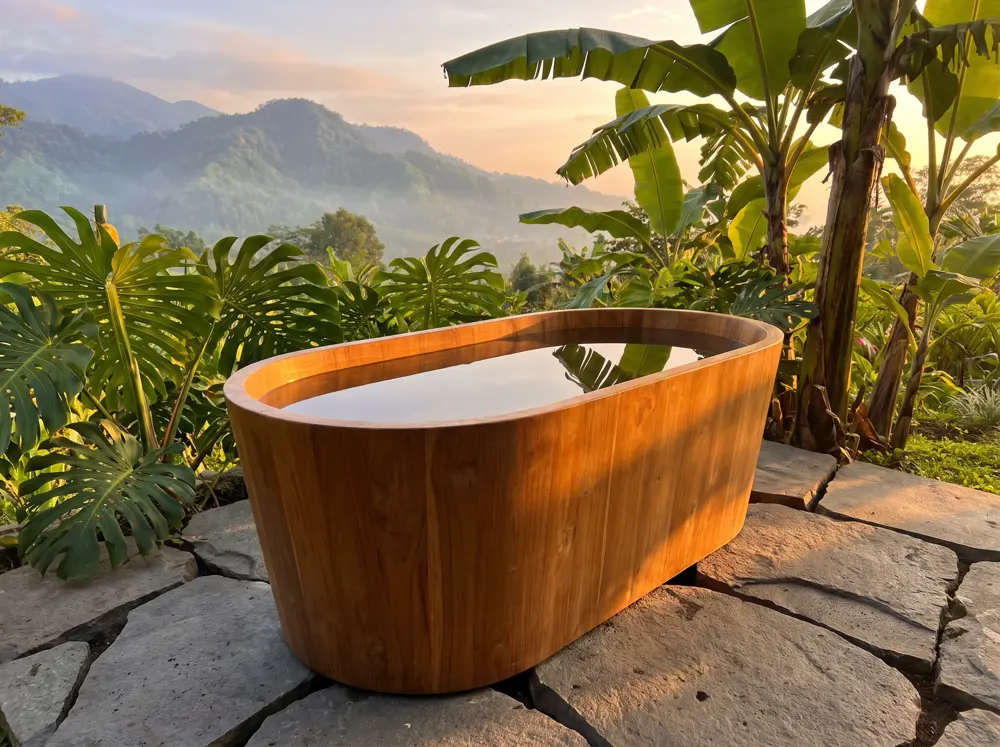
The plunge is sitting at 4°C. He finished his last set of heavy squats ninety seconds ago, he is in the water up to his collarbones, and he is certain this is helping him recover. He might be right. But if the point of that session was to get stronger, part of the work he just paid for is quietly dissolving.
Almost every argument about the ice bath for athletes is stuck on temperature and duration, when the variable that decides the outcome is what time you get in. We have built ice baths in Bandung for three years, and the question our athlete clients ask least is the one that matters most. Not "how cold". When.
Inflammation after lifting is not damage, it is an instruction
Heavy resistance training tears muscle fibres on a microscopic scale. The body answers with local inflammation: blood flow rises, repair cells arrive, and chemical signals tell the muscle to rebuild slightly stronger than it was. The soreness two days later is a side effect of that process. Not the goal, but not the enemy either.
Cold water does one thing extremely well. It constricts blood vessels, cuts flow to the muscle you just trained, and damps that response down. If your target is waking up tomorrow with usable legs, good news. If your target is a stronger athlete in six weeks, you have turned down the volume on a signal you paid a great deal to produce. Research suggests that cooling immediately after strength work can blunt some of the long-term adaptation: reduce it rather than erase it, by an amount still argued over.
Endurance training appears to play by different rules. The adaptations from a long run or a 90-minute ride lean on other mechanisms, and those look less sensitive to cold than strength adaptations do. Which is why the answer is never yes or no. It depends on what you just did.
The framework: this week, are you adapting or recovering?
One question settles most of the confusion. Answer it every Monday and let the answer make the decisions.
Adapting means you are building something: strength, muscle, threshold, aerobic base. You want the body to feel the load in full and respond. Here, cold is interference you added yourself.
Recovering means you are protecting something. You perform again in 18 hours, or tomorrow, or this afternoon in the second half. Long-term adaptation is not this week's problem. Usable legs are. Here, cold is exactly the right tool.
Athletes confused about ice baths are usually not confused about ice baths. They are confused about which phase they are in.
If you cannot say "this week I am adapting" or "this week I am recovering" in one sentence, the ice bath is not your biggest problem.
The four-to-six hour rule of thumb
The good news: you do not have to choose between the ice bath and the results. You have to put a gap between them.
The working rule most coaches use is a minimum of four to six hours between a strength session and a cold session. The most sensitive part of the signalling window sits in the first hours after training. Clear it and you still get most of what athletes actually value about cold, which is a clear head, light legs and deeper sleep. You just pay far less for it in lost adaptation.
In practice, in Bandung, that means lifting at 07:00 and plunging at 17:00 or later. Or training in the evening and plunging before work next morning. What does not work is towel, then tub.
Be honest about that number, though. No biological stopwatch chimes at hour four. It is a rough compromise, long enough to clear the sharpest part of the window and short enough to fit inside a normal day. A fence, not a law.
Cold dose is temperature multiplied by time, not temperature alone. The units we build hold 2-8°C on a chiller, and for most athletes two to three minutes at the cold end of that band does the same job as a much longer sit in warmer water. Colder is not better, only faster. Numbers in our guide to ideal ice bath temperature.
Ice bath for athletes: when to use it, when to skip it
| Session type | Main goal | Ice bath? | Notes |
|---|---|---|---|
| Heavy lifting (strength / hypertrophy) | Adapt | Skip, or wait 4-6 hours | The early inflammation window is the signal |
| Long endurance run or ride | Recover | Fine, including straight after | Endurance adaptation looks less cold-sensitive |
| Intervals or HIIT | Mixed | Depends on phase | Off-season skip; in-season go ahead |
| Light skill or technique work | Neutral | Your call | Small effect either way |
| Tournament, two matches in a day | Recover fast | Yes, clearly | Nothing to adapt to this week |
| Rest day | Neutral or mental | Yes | The safest slot in the week |
| Acute injury, swelling, bruising | Symptom management | Ask a doctor first | Not a substitute for medical care |
In-season versus off-season: the calendar outranks preference
The off-season is for building. Nothing needs winning this month, and the point of training hard is to let the body take a shock and then grow. Here we suggest using the ice bath rarely and deliberately: rest days, after endurance sessions, or for the mental reason below. Not as a reflex after every session.
In-season flips it. You compete every weekend, you train mainly to hold condition, and the target is fresh legs dozens of times a year. Maximum adaptation is no longer the goal; availability is. The ice bath stops being interference and becomes infrastructure.
It is also why the clubs we work with around Bandung and Jatinangor ask for units that take eight to twelve people in rotation within an hour. That is not the same brief as one person plunging alone in a garage: chiller capacity, 20µm filtration and UV sterilisation all get recalculated for that load. We go through the numbers in our notes on ice bath water maintenance.
Match day: before, between, after
Before competing, an ice bath is generally a bad idea. Cold muscle produces less force and produces it more slowly, and the effect can last tens of minutes. If you want it for mental reasons anyway, leave two hours and make your warm-up a real one.
Between matches, say two fixtures in a day or a morning heat and an afternoon final, the ice bath is one of the best tools you have. There is no adaptation to protect inside a four-hour window. What you need is core temperature down, swelling damped, and legs that feel usable again. Many athletes report that three to five minutes in cold water makes the second outing feel noticeably lighter.
After the tournament, put the framework back. You have returned to an adaptation phase, so the separation rule returns with it.
The part nobody quite admits: cold trains the head
There is a reason to use an ice bath that has nothing to do with muscle, and we think it is the one that holds up best.
Getting into 4°C water is a very specific exercise. Your body shouts at you to get out, your breathing shortens on its own, and your job is to stay seated and deliberately slow it back down. Stress you control completely, for a duration you set, with no consequences if you fail. Many athletes report that settling themselves in the first 90 seconds feels like what they need in the closing minutes of a match. We cannot claim that transfers measurably, and the evidence is thin. But we hear it often enough not to dismiss it.
If this is your reason, the adapt-versus-recover framework does not apply. The clock still does. Do it on a rest day or first thing in the morning, away from the weights room, and the mental training costs you nothing.
The honest verdict: this is contested ground
We sell ice baths. Please factor that in while you read this section.
Cold recovery science is not settled. The studies tend to be small, use protocols that differ, and measure things that are not the same. Some show a clear blunting of strength adaptation, some find nothing. Much of what athletes report is subjective too: feeling fresher, sleeping better. Subjective effects should not be read across as physiological ones, but do not throw them away either. An athlete who feels ready trains better.
Anyone telling you this question is closed is selling something. What we can defend is narrower: cold is a tool with real effects whose direction depends on timing. Use it deliberately and it almost always helps. Use it as a reflex after every session and you are running an experiment that may be making you weaker.
Before starting regular cold exposure, and especially with a heart condition, uncontrolled blood pressure, epilepsy, or during pregnancy, talk to a doctor first. That is not legal decoration. The cardiovascular response to cold water is real and sudden.
If you are costing a unit of your own, our ice bath page carries the specifications and our team in Bandung will run a free site survey. For the wider picture, start with the benefits of ice baths, then the contrast therapy guide.
Frequently asked questions
How long should an athlete stay in an ice bath?
For recovery purposes, two to three minutes at 2-8°C is enough for most athletes. Duration and temperature are the same dose: the colder the water, the less time you need. Sitting for ten minutes does not make the effect ten times better, it just makes it more unpleasant and less safe.
Does an ice bath after lifting weights reduce your gains?
Possibly, if you do it straight after the session. Research suggests that cooling in the first hours after strength work can blunt part of the long-term adaptation, though the size of that effect is still debated. The practical fix is not to stop using the ice bath, but to put four to six hours between the two.
Can you use an ice bath before a game?
Better not to. Cold muscle produces less force and produces it more slowly, and the effect can persist for tens of minutes. If you want it for mental preparation anyway, leave at least two hours and do a full warm-up afterwards.
Is it OK to ice bath every day?
Physically it usually is, but the question is aimed at the wrong thing. What matters is not the frequency, it is the distance from your strength sessions. Daily plunges during an off-season muscle-building block are a poor choice, while daily plunges through a congested tournament week make complete sense.
Sauna first or ice bath first for recovery?
For contrast therapy the sequence we recommend is 10-15 minutes hot, then 1-3 minutes cold, then 5-10 minutes rest, repeated for two or three rounds. Finish however you prefer; there is no hard rule about ending hot or ending cold. If your goal is purely recovery after a hard session, cold on its own is enough.
Information on this site is educational and is not medical advice. Consult a doctor before starting heat or cold therapy.
Ice bath water maintenance: cold slows bacteria, it doesn't sterilise
An ice bath is 400 litres of water that people sweat into straight after 15 minutes at 90°C. Cold doesn't solve that problem — it conceals it.
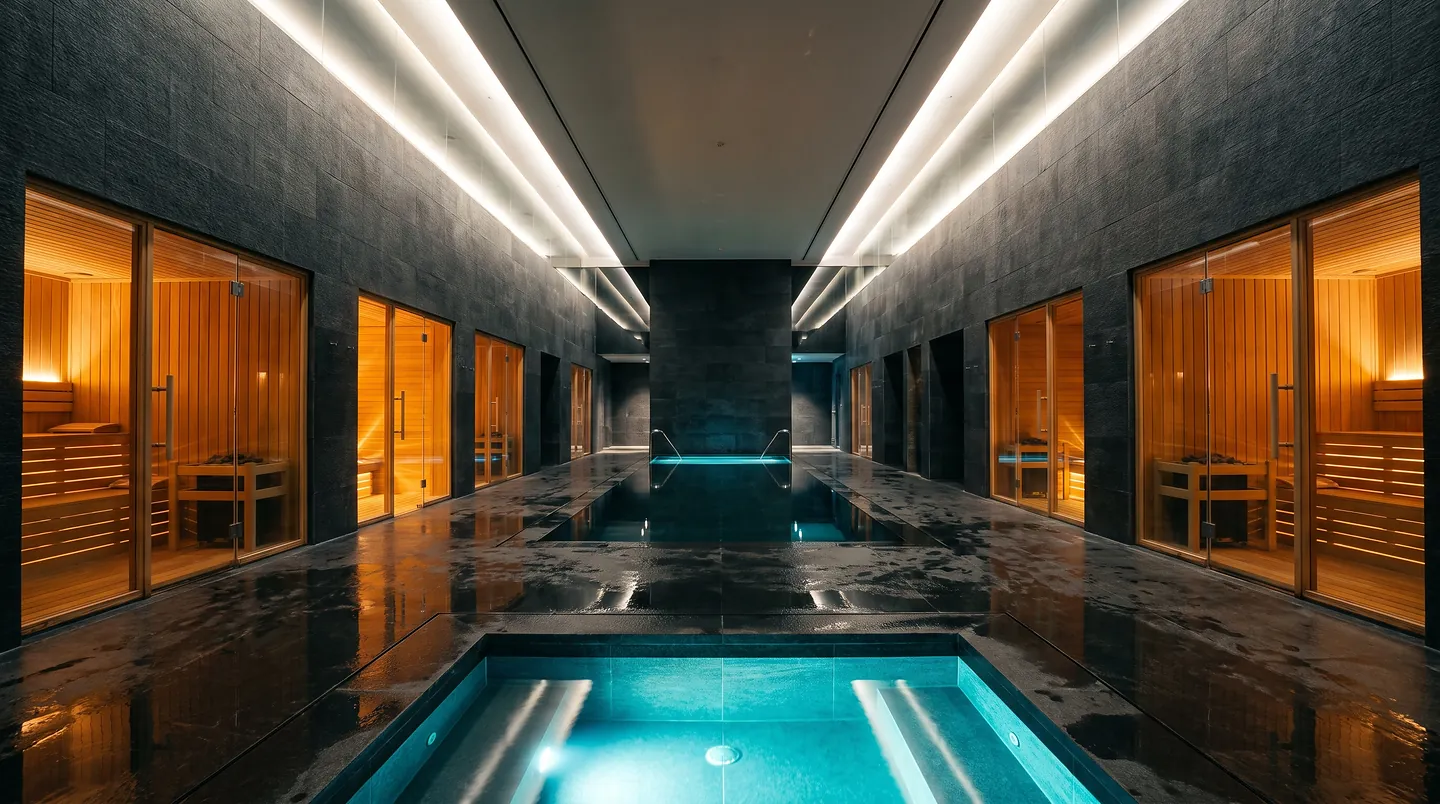
A commercial sauna for hotels is a different machine from a home one
The same 8 kW heater runs 150 hours a year in a home and 5,800 in a hotel. Every spec difference falls out of that one number.
Stop sizing your sauna by floor area
Two saunas, identical floor plan, identical heater. One works. The difference is 55 cm of ceiling.
Start with a free survey
We come to your place in Bandung, measure, check the power, and tell you what's possible and what isn't. No cost, no obligation.