Sauna health benefits, minute by minute inside a 90°C room
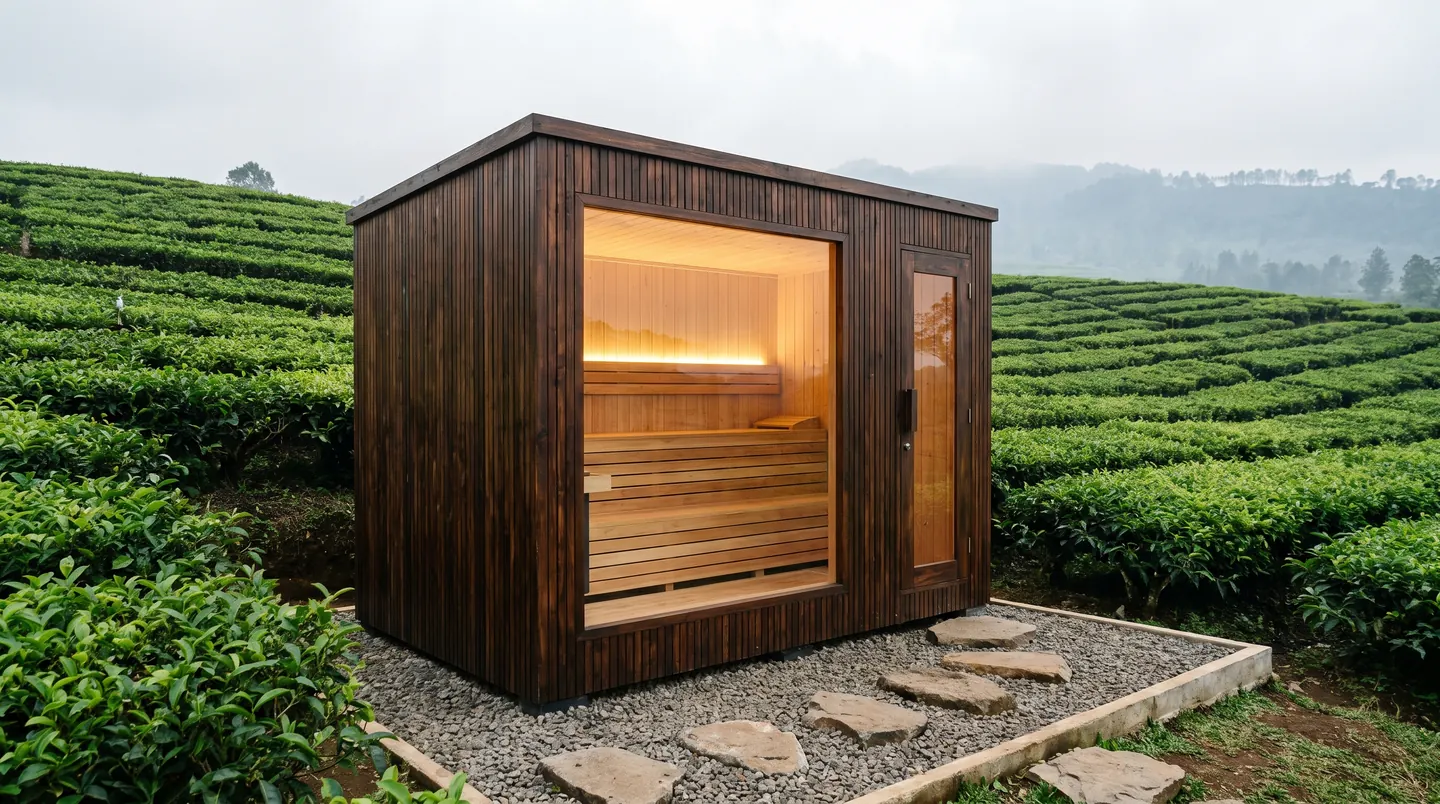
The wall thermometer reads 90°C at 12% humidity. You take the top bench, start a timer, and for the first three minutes nothing dramatic happens — no sweat, just an even warmth. Inside, though, something significant is already underway: the blood vessels in your skin are opening, and your heart is speeding up to move heat out to the surface. That is where nearly all the real sauna health benefits come from — not the heat itself, but the work your body does to get rid of it.
We have been designing and building saunas in Bandung for three years, past 100 projects now. The question we field most often isn't about price. It's "does it actually do anything, or is it just a nice ritual?" The honest answer has tiers. Some effects are well documented, some are genuinely contested, some are plainly oversold — and the part most people skip happens after they leave the room.
Fifteen minutes at 90°C: what is happening inside
Heat at 90°C and 10–20% humidity cures nothing. What it does is force your thermoregulatory system to run flat out for a quarter of an hour. The response to that load is the interesting part. The table below is the general pattern for a single dry sauna round. Numbers vary by person — fitness, hydration, and how acclimatised you are all move them.
| Minute | What happens inside | What you feel |
|---|---|---|
| 0–3 | Skin vasodilation begins, blood flow shifts to the surface | Even warmth, no sweat yet |
| 3–6 | Skin temperature climbs toward 40°C, sweat glands switch on | First sweat on forehead and back |
| 6–10 | Heart rate rises, typically into the 100–120 bpm range | Deeper breathing, like walking uphill briskly |
| 10–15 | Core temperature up roughly 0.5–1°C, sweat rate peaks | Heat feels "full" — this is the natural stopping point |
| Exit +0–2 | Blood pressure dips while vessels are still dilated | Light-headed. Sit first, don't stand up fast |
| Exit +5–20 | Parasympathetic system takes over, heart rate drops below baseline | Heavy, dreamy calm — this is what people come back for |
Look at the last two rows. Most people think the sauna is the part inside the room. Physiologically, the part you feel most is the twenty minutes after the door shuts behind you.
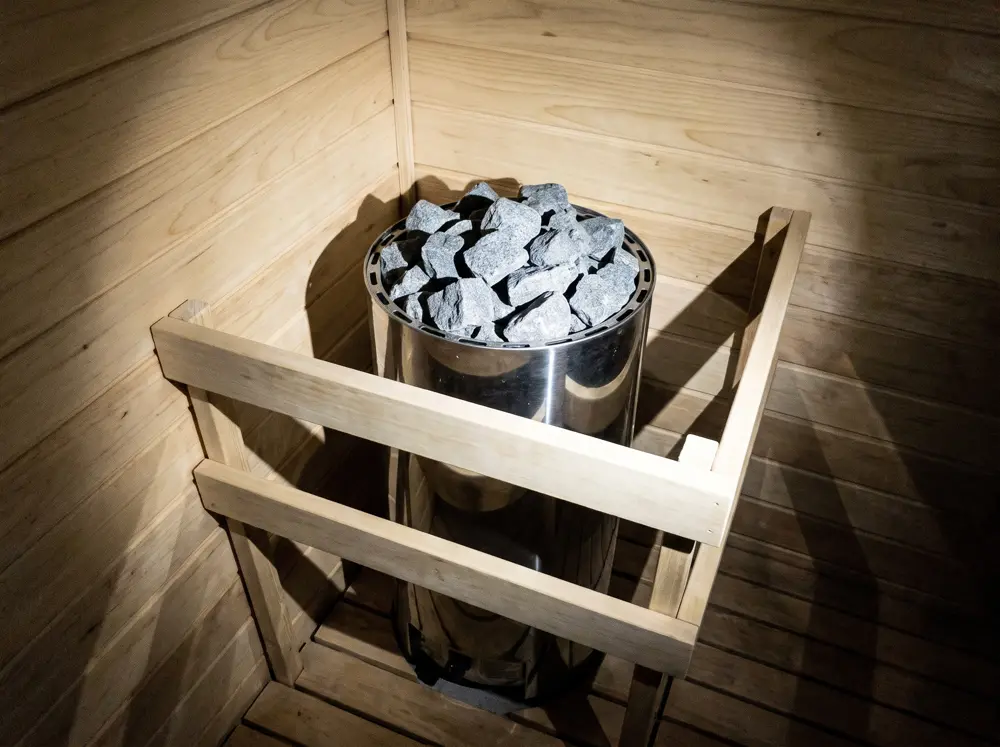
Cardiovascular response: like a brisk walk, not a substitute for exercise
To move heat to your skin, your heart has to raise output. For most people, heart rate between minute 10 and 15 sits in a light-cardio zone — roughly what you'd see walking briskly uphill. Hence the nickname "passive cardio".
That nickname is half right and needs correcting. Observational research associates regular sauna use with better cardiovascular markers. But observational studies show association, not causation: people who use saunas regularly tend to differ in other habits too, and untangling that is hard. What is certain is that a sauna puts no mechanical load on muscle or bone. It won't build strength and it doesn't replace running or lifting. It adds a heat load, not a work load.
Recovery and muscle soreness
Many users report looser muscles and milder next-day soreness after a session. The mechanism is plausible enough: blood flow to muscle increases and soft tissue is more pliable when warm.
Here's where we have to be straight with you. The thing that improves most consistently is the feeling — people's own subjective ratings of their recovery. Objective markers are far more mixed across studies. That doesn't make the effect fake; less pain is a real outcome for the person feeling it. But it's a different claim from "saunas speed up muscle repair", and we won't make the second one.
Sleep
This is what our clients report first, usually within the first fortnight, and the mechanism is reasonably direct. Your core temperature rises in the room, then falls fairly sharply over the next 60–90 minutes. That falling core temperature is one of the signals your body uses to initiate sleep. The sauna effectively sharpens the signal.
Which makes it a timing question. A session ending 1.5–2 hours before bed tends to help. A session ending fifteen minutes before bed does the opposite — you get into bed with your core still hot and lie there. We go into the scheduling detail in our guide on how to use a sauna properly.
Stress and the parasympathetic rebound
Inside the room your sympathetic nervous system is engaged: heart rate up, body alert. The moment you step out and start cooling, the swing reverses — the parasympathetic system takes over, heart rate drops, often below where it was before you went in. That heavy, slightly dreamy calm after a sauna isn't your imagination. It's that swing.
Of everything in this article, this is the effect people report most consistently and notice fastest — usually on their very first session.
Skin, and the "detox" claim you should discard
Blood flow to the skin increases sharply during a session, and plenty of people report their skin feeling clearer afterwards. Fair enough, so far.
What isn't fair is the "sweat out your toxins" claim. Sweat is mostly water and salt. The organs that clean your blood are your liver and kidneys, and neither works faster because you're sitting in a hot room. If a sauna company leads with detox, that isn't marketing — it's fiction. Same goes for weight loss: the scale does drop after a session, and it comes straight back with your first glass of water. What you lost was water, not fat.
We sell hot rooms, not medicine. That distinction matters, and anyone who blurs it is selling you something else.
The cool-down: the part almost everyone skips
In most homes the sequence goes: out of the sauna, straight into a warm shower, dressed, done. That cuts out the most valuable part — the twenty minutes when everything swings back.
And this is where there's a real geographic advantage. Bandung sits at around 750 metres, and evenings drop to 18–20°C. Stepping out of a 90°C room into 19°C air is a seventy-degree gap that feels extraordinary: your skin cools itself, no equipment required. In Jakarta you step out of a sauna into humid 28°C air and keep sweating for the next twenty minutes. The cool-down phase effectively doesn't exist. This is the engineering reason a terrace and cross-ventilation are in every layout we draw up here — and if you moved here from a country with a sauna culture, this is the part that will feel familiar for the first time.

If you want to sharpen that swing further, harder cold accelerates it — that's the subject of ice bath benefits, and how to combine the two is covered in our contrast therapy guide. But to be clear: cool air alone gets you most of the cool-down effect. An ice bath sharpens it, it doesn't replace it.
A dry sauna that works properly runs at 80–95°C with 10–20% humidity. If your room feels stuffy and damp at 70°C, the problem isn't a weak heater — it's ventilation or a failed vapour barrier. In a humid highland climate, those two details decide whether your sauna lasts six years or two.
An honest map of the sauna health benefits: what holds up, what doesn't
If you want it in one sentence: the research is promising but unsettled, and the quality of evidence varies enormously from claim to claim. Here's the map, strongest to weakest.
- Most consistent: relaxation, reduced perceived stress, and self-reported sleep improvement. Subjective, yes — but reported near-universally and noticed immediately.
- Promising but observational: the link between regular sauna use and cardiovascular markers. The data is interesting; the study design can't establish cause.
- Mixed: muscle recovery. Subjective ratings improve more reliably than objective markers do.
- Unsupported: detox, fat burning, "immune boosting". Walk away from anyone selling these as features.
Who should talk to a doctor first
Saunas are not for everyone, and this isn't legal boilerplate. Talk to your doctor first if you are pregnant, have a heart condition, have uncontrolled high blood pressure, or have epilepsy. The same applies before starting any cold exposure. Alcohol and saunas are a genuinely bad combination — both dilate blood vessels and drop blood pressure, and you don't want to find the limit experimentally. The full list is in our sauna safety guide.
For healthy people the practical rule is simple: get out when you want to get out, not when the timer says you may. Your body signals earlier than any timer will.
The short version
Fifteen minutes at 90°C puts your heart at brisk-walk effort, opens the vessels in your skin, and lifts your core temperature by roughly half a degree to a degree. The next twenty minutes — when it all swings back — is where most people actually feel the benefit. That's why we design the hot room and its cool-down space as one system rather than two products.
If you want a straight answer about what makes sense for the space you have, talk to us. Site survey and 3D layout are free within Bandung, and we'll tell you plainly if your space is a bad fit.
Frequently asked questions
How long should a sauna session be?
For most people, 10–15 minutes per round at 80–95°C is enough to get the full physiological response. Staying longer doesn't add benefit, it just adds strain. A better rule than a timer: leave when the heat starts to feel full, then rest 5–10 minutes before the next round.
Does a sauna help you lose weight?
No, not in the way people mean. The weight you lose in a session is water, and it returns as soon as you drink. Saunas don't burn a meaningful amount of fat, and anyone marketing one as a weight-loss device is overselling it.
How often can you use a sauna?
For healthy adults, 2–4 sessions a week is the pattern we see stick long term, and some users go daily without trouble. Hydration and honesty about how you feel matter more than frequency does. If you feel wiped out afterwards, cut the duration before you cut the frequency.
Is a sauna safe if you have high blood pressure?
That's a question for your doctor, not your sauna builder. Heat dilates blood vessels and briefly lowers blood pressure after you exit, which can be a problem if your blood pressure is uncontrolled or you're on certain medications. Anyone with a heart condition, uncontrolled hypertension, epilepsy, or who is pregnant should get medical advice first.
Should you use a sauna before or after a workout?
After, for most people. A sauna before hard training raises your core temperature and makes the session feel heavier with no clear upside. Afterwards, many users report looser muscles — though it's worth noting that what improves most consistently is the feeling, not measurable recovery markers.
Information on this site is educational and is not medical advice. Consult a doctor before starting heat or cold therapy.
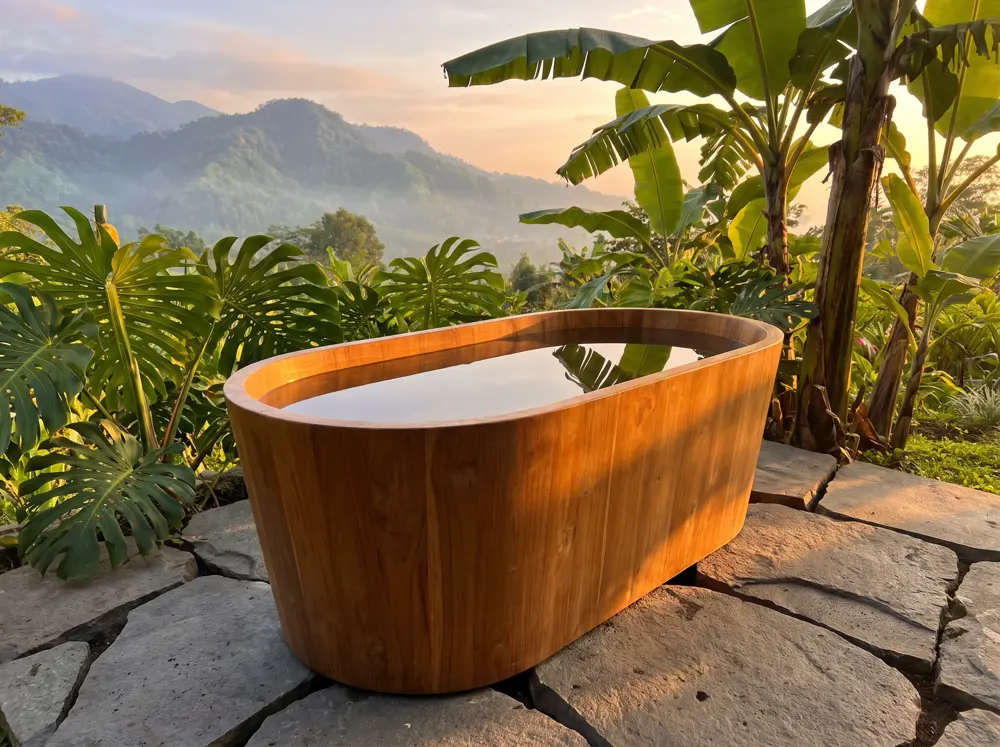
Try it with a tub and bagged ice before you think about Rp 38 million
Almost everyone still using an ice bath a year later did it the cheap, uncomfortable way first.

Which parts of a sauna forgive you, and which parts punish you
We have pulled apart DIY saunas with tidier joinery than our own workshop produces. The wall behind them was black.
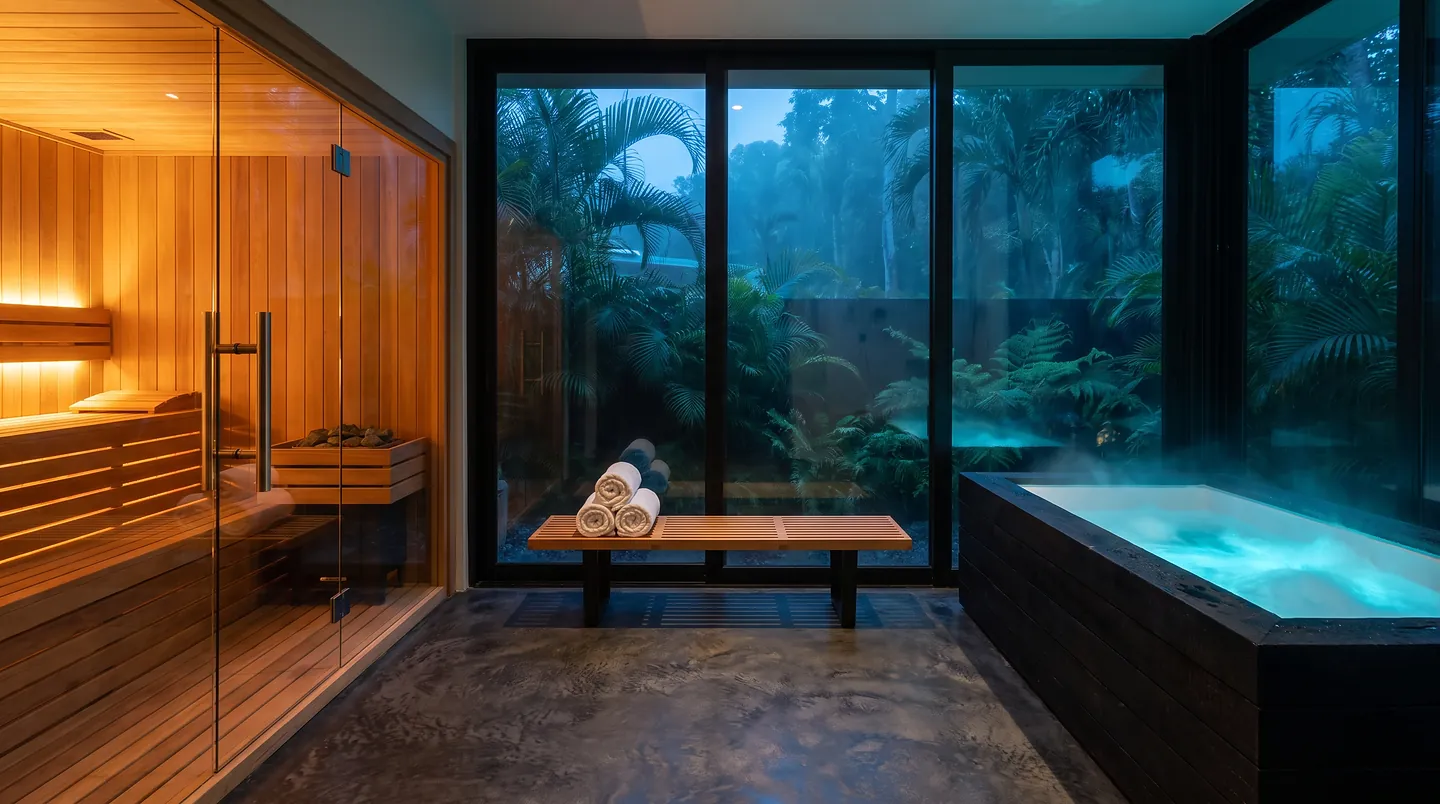
Sauna safety: safe for most people, genuinely risky for a few
The most dangerous thing in a sauna is not the 90°C. The article every company selling these should write, and almost none do.
Start with a free survey
We come to your place in Bandung, measure, check the power, and tell you what's possible and what isn't. No cost, no obligation.