How to use a sauna: seven steps, and the etiquette nobody explains
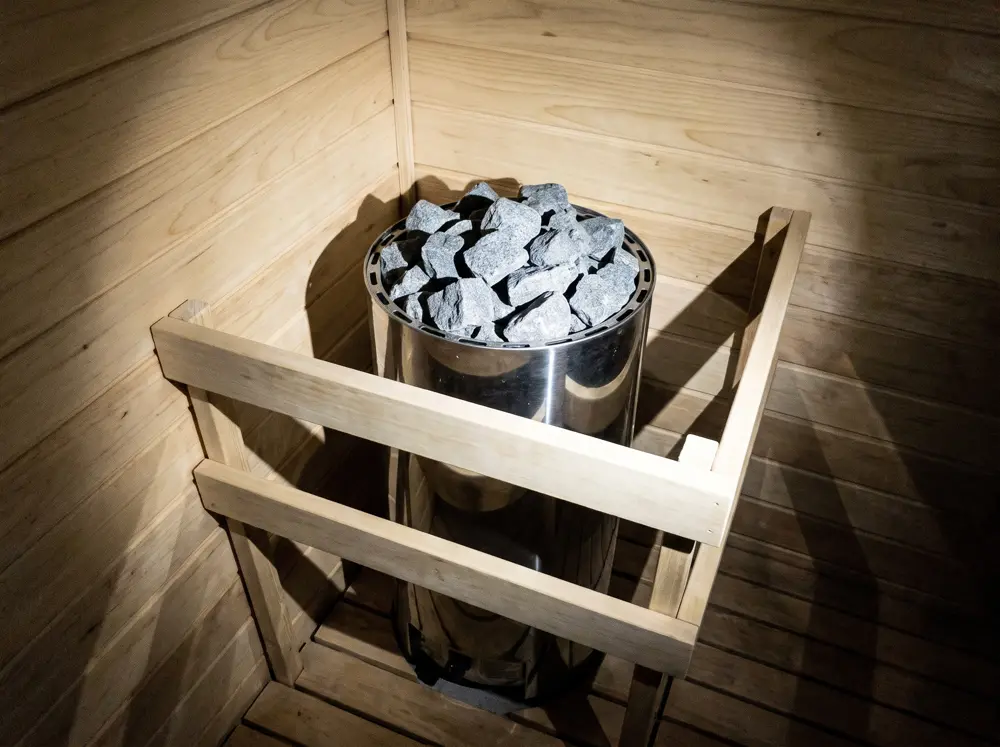
Watch anyone use a sauna for the first time and they do the same thing: climb straight to the top bench, because hottest must mean best. Four minutes later they are outside with a thumping head, concluding that saunas are not for them. The sauna was not the problem. Three small decisions in the first five minutes were, and nobody had told them. How to use a sauna is genuinely simple — but almost everything that matters happens before and after you sit down.
How to use a sauna properly starts before you open the door
Take a short warm shower, then towel yourself completely dry. Two concrete effects. First, the film of oil, deodorant, lotion and old sweat on your skin comes off — and that film is exactly what slows sweating down. Second, dry skin does not spend your first five minutes evaporating shower water, which cools you as it goes. Walk in damp and you pay a time tax at the start of the session. Shower and dry off and you typically start sweating minutes earlier than someone who came straight from the car.
Bring two towels: one to sit on, one to dry off between rounds. The one you sit on is not a politeness convention — wood absorbs sweat, sweat feeds bacteria, and a bare bench stains dark within months. We build benches from cedar, thermo-aspen or hemlock because those species behave well at 90°C, but no timber is immune to absorbing sweat several hundred times. More on species in our sauna wood guide.
The top bench and the bottom bench are two different saunas
Hot air rises. Inside a dry sauna cabin that means far more extreme stratification than people expect: the top bench can run 15–20°C hotter than the bottom one. If the wall thermometer reads 90°C — and it is almost always mounted at head height for someone sitting up top — then the air around the feet of someone on the lower bench may be in the seventies. You are not choosing a seat. You are choosing a dose.
So our instruction to beginners never changes: first round on the bottom bench, always. That is not the beginner's version of a sauna, it is calibration. Find out how your body reads heat before raising the stake. Second round, go up if you want.
One detail rarely mentioned: on the top bench, get your feet up onto the bench. Feet dangling in the seventies while your head sits in the nineties is the most reliable way to feel unwell without understanding why. The body does not enjoy a twenty-degree gradient running down its own length.
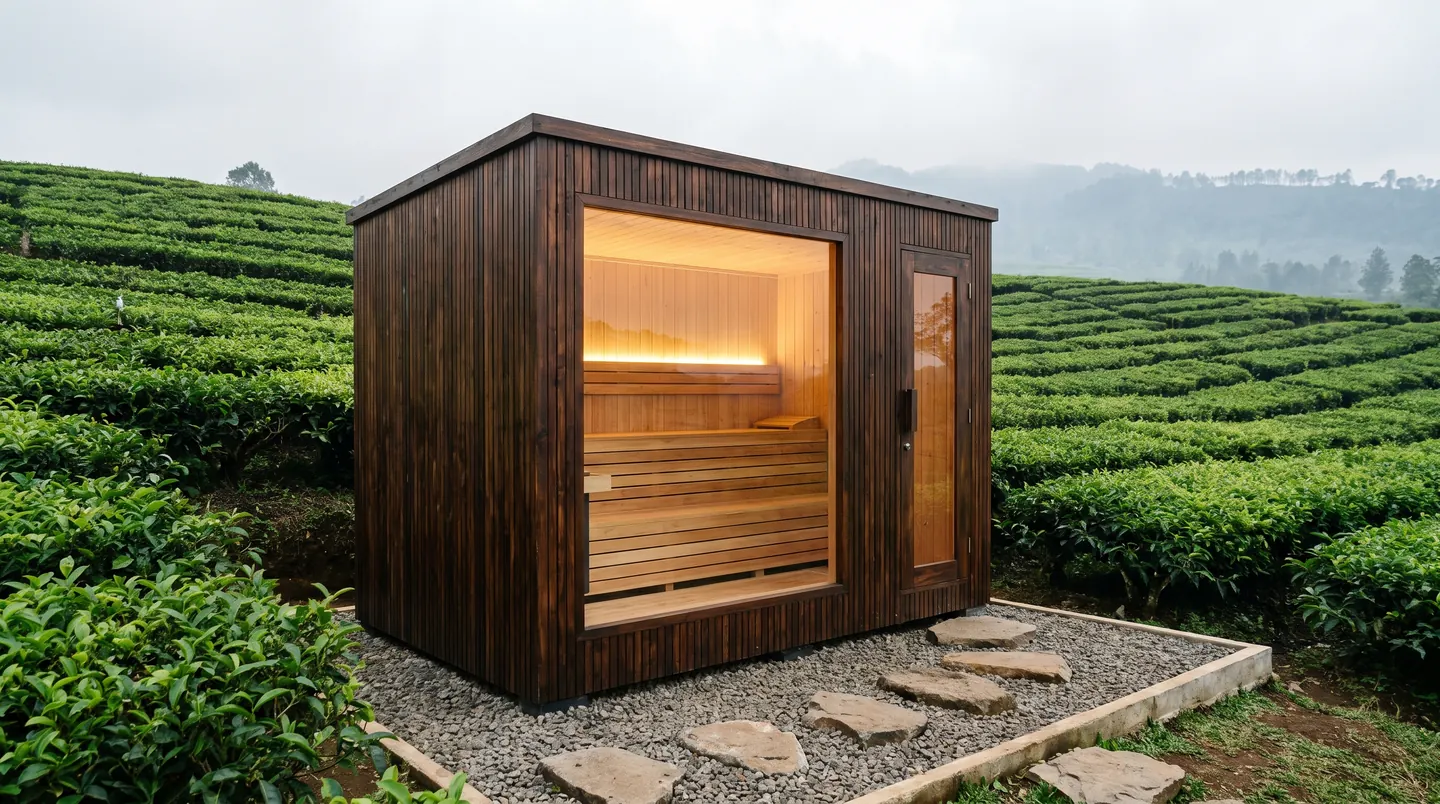
Löyly: what actually happens when water hits the stones
This is the most misunderstood part of the ritual. You throw a ladle on the stones, steam cracks off them, and within ten seconds the cabin feels twice as hot. Instinct says the temperature went up. It did not.
A dry sauna runs at 10–20% humidity. One ladle spikes that for thirty to sixty seconds. Your sweat cools you by evaporating; when the air suddenly fills with vapour, that evaporation slows and your cooling system loses part of its capacity. You feel much hotter because you genuinely are getting hotter — not because the air is hotter. The wall thermometer often ticks down slightly after löyly, since the evaporating water pulls energy out of the stones. Both things are true at once: the number falls, and you cook.
So treat löyly as a sharp increase in dose, not as seasoning. One small ladle, wait thirty seconds, assess, then decide about the next. Emptying a bucket does not make you tough, it makes you leave sooner — and if the stones are not fully up to temperature, the excess just runs through and makes the heater work for nothing.
When to leave: listen to the body, not the clock
The 10–15 minutes we recommend is a range, not a target. The arithmetic makes it obvious: 12 minutes on the top bench at 95°C with three ladles of löyly is a completely different dose from 12 minutes on the bottom bench at 80°C with none. Same clock. Different session entirely.
The signals to leave all arrive before you feel you "have to": a heart rate that feels disproportionate, a head going light or starting to throb, any tingling, or — the subtlest and most ignored — a creeping sense of being rushed, of wanting this to be over. That impatience is your body speaking before symptoms get a chance to. Leave then, not three minutes later.
And stand up slowly. Sit on the bench edge for ten seconds first. Your blood vessels are dilated; standing abruptly from lying down at 90°C is the most common way people faint in a sauna, and it is entirely avoidable. If you run a villa or a hotel, that sentence belongs on the guest card.
The cool-down is half the session, not an add-on
Do only the hot part and you have done half the work. The cool-down closes the loop and delivers the contrast people came for. Three options, all legitimate: a cool shower, 1–3 minutes in an ice bath at 2–8°C, or — an advantage Jakarta does not have — simply stepping outside. Bandung evenings sit at 18–20°C. After 90°C, that reads as free cold water.
If you take the ice bath route, water temperature matters and it is not as simple as "as cold as possible"; we work through the numbers in our ideal ice bath temperature guide. Then rest 5–10 minutes, and do not skip it. The floating, level feeling people associate with saunas shows up here, as the heart rate drops and the vessels reopen — not inside the cabin.
| Step | Duration | What you do | Why |
|---|---|---|---|
| 1. Shower and dry | 3–5 min | Warm water, light soap, towel until the skin is dry | Strips the oil film; sweating starts sooner |
| 2. Round 1 — bottom bench | 8–12 min beginner, 10–15 min regular | Sit on your towel, breathe slowly through the nose | The bottom bench is 15–20°C cooler; this is calibration |
| 3. Löyly (optional) | 1 ladle, wait 30 sec | One small ladle on the stones, assess, repeat if wanted | The humidity spike feels far hotter without raising air temperature |
| 4. Exit | When the body says so | Sit on the bench edge for 10 seconds, then stand | Standing abruptly after vasodilation means a light head |
| 5. Cool-down | 1–3 min | Cool shower, 2–8°C ice bath, or a Bandung evening outdoors | This is half the session, not a garnish |
| 6. Rest | 5–10 min | Sit, drink water, let the heart rate fall on its own | The effect you came for shows up here, not in the cabin |
| 7. Rounds 2–3 | Repeat steps 2–6 | Move up to the top bench on the second round if you like | Finish whenever you want — three rounds is not an obligation |
Water, and a myth worth dropping
Drink before you go in and again at every rest interval. That is the whole rule. Mild dehydration is the most common reason people feel poor a few hours after a sauna and then blame the sauna.
Now the part the market oversells: sweat is not a filtration system, it is a cooling system. Your kidneys and liver handle the clearing work, and they were not waiting for you to sit in a wooden box to get started. The "sweat out your toxins" line is marketing, not physiology, and we would rather not sell it. There are enough good reasons to use a dry sauna without inventing another. Do not chase sweat volume as a score.
Do not go in after drinking
This is the one rule on the page with no nuance in it. Alcohol dilates your blood vessels and makes you lose fluid. A sauna does precisely those two things. Stack them and blood pressure drops further than you expect, exactly when your body most needs to regulate.
The more important reason is not blood pressure. A sauna demands exactly one skill: noticing how you feel and acting before symptoms arrive — step 4 above. Alcohol removes that skill first. You lose the instrument before you lose anything else. Fitting a sauna into a villa or a guest area? This belongs on the instruction card. The remaining contraindications are in our sauna safety guide.
The clock does not know which bench you are sitting on. Your body does.
Speak to a doctor before using a sauna if you are pregnant, have a heart condition, uncontrolled blood pressure, or epilepsy. Research on sauna use points in promising directions and many users report better sleep and a better sense of recovery, but a sauna is not a treatment and does not replace medical care.
Once the seven steps go automatic
Most people need three or four sessions before this stops feeling like a checklist and starts feeling like a rhythm. After that you stop watching the clock entirely, which is the real sign you are doing it right. To take the cold side seriously, the ordering and number of rounds have their own logic — set out in our hot and cold contrast therapy guide.
We have designed and built saunas in our own Bandung workshop for three years, and every cabin leaves with bench heights and vent positions already worked out — because every piece of advice here only holds if the room was built to support it.
Frequently asked questions
How long should you stay in a sauna?
10-15 minutes per round is a reasonable range for most people, but the number depends on your bench and your löyly: 12 minutes on the top bench with steam is a far bigger dose than 12 minutes on the bottom bench without. Beginners should start at 8-12 minutes on the lower bench. Leave when your heart rate feels disproportionate, your head goes light, or you start feeling rushed.
Do you have to shower before a sauna?
You should, and not only for hygiene. A warm shower strips the oil, lotion and deodorant film that slows sweating, so you start sweating a few minutes earlier. Towel dry afterwards, because water left on the skin cools you as it evaporates and delays the whole session.
Why is the top bench so much hotter?
Hot air rises, and stratification inside a sauna cabin is extreme: the top bench can be 15-20°C hotter than the bottom one. The wall thermometer is normally mounted at head height for someone on the top bench, so that 90°C reading is not the temperature at your feet if you are sitting low. Beginners should always take the first round on the bottom bench.
How often can you use a sauna?
There is no fixed number. Many of our regular clients use theirs two to four times a week, and research on frequency points in interesting directions but is not settled. Start at one or two sessions a week and build up if you feel good the following day.
Can you use a sauna after drinking alcohol?
No. Alcohol dilates blood vessels and dehydrates you, and a sauna does exactly those two things, so blood pressure can drop further than you expect. More importantly, alcohol removes your ability to sense when it is time to get out, and that is the one skill a sauna genuinely requires.
Information on this site is educational and is not medical advice. Consult a doctor before starting heat or cold therapy.

There is no ideal ice bath temperature — there is a dose
Ice gives you 5°C at minute zero and 11°C at minute eight. That is not a protocol, it is a coincidence.
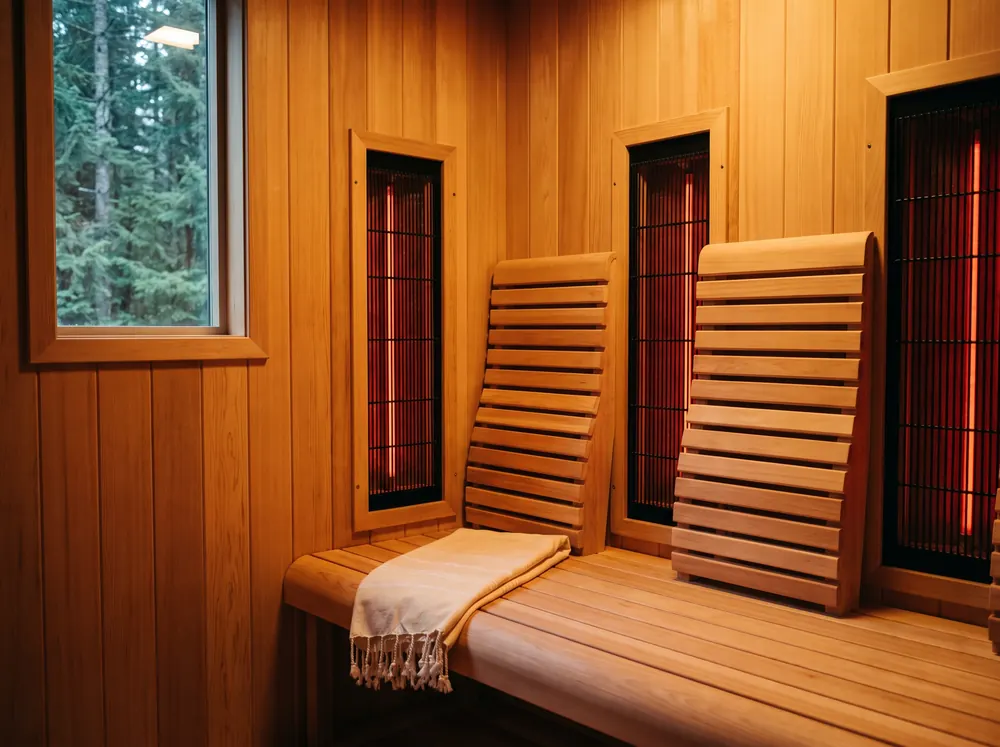
Infrared vs traditional sauna: one heats you, the other heats the room
Infrared isn't a cheap Finnish sauna. It's a different machine — and in a Bandung house, the electricity meter usually decides for you.
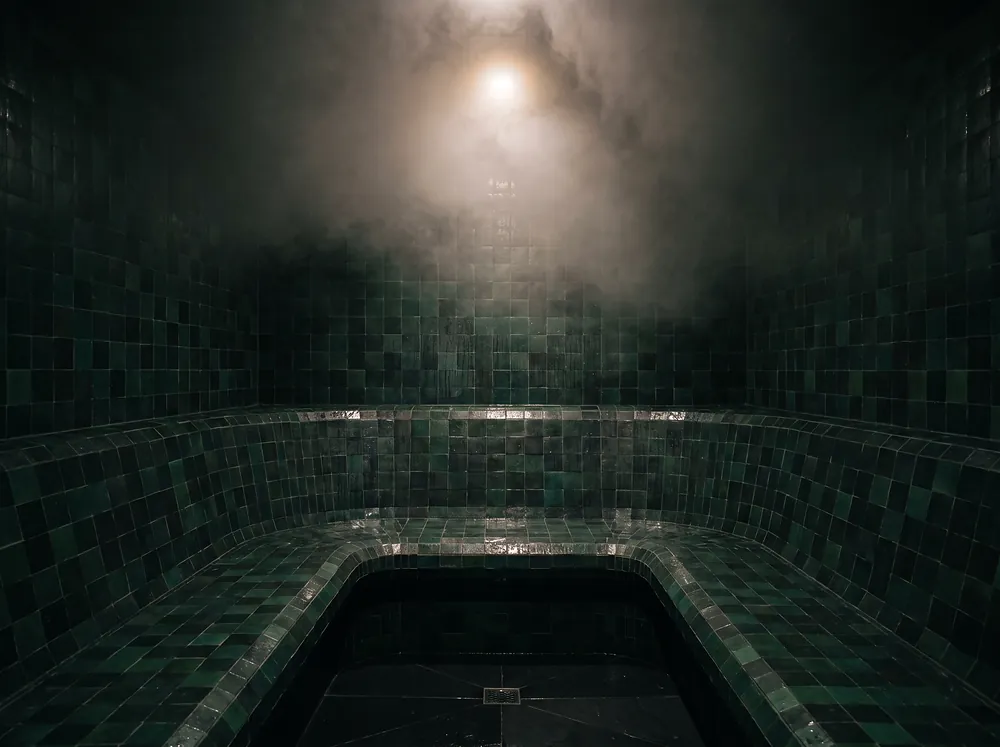
Dry sauna vs steam room: why 45°C wet is harder than 90°C dry
It was never about the temperature. The difference is whether your sweat still has anywhere to go — and the entire building follows from that.
Start with a free survey
We come to your place in Bandung, measure, check the power, and tell you what's possible and what isn't. No cost, no obligation.