Ice bath benefits: what's real, what's argued about, what's oversold
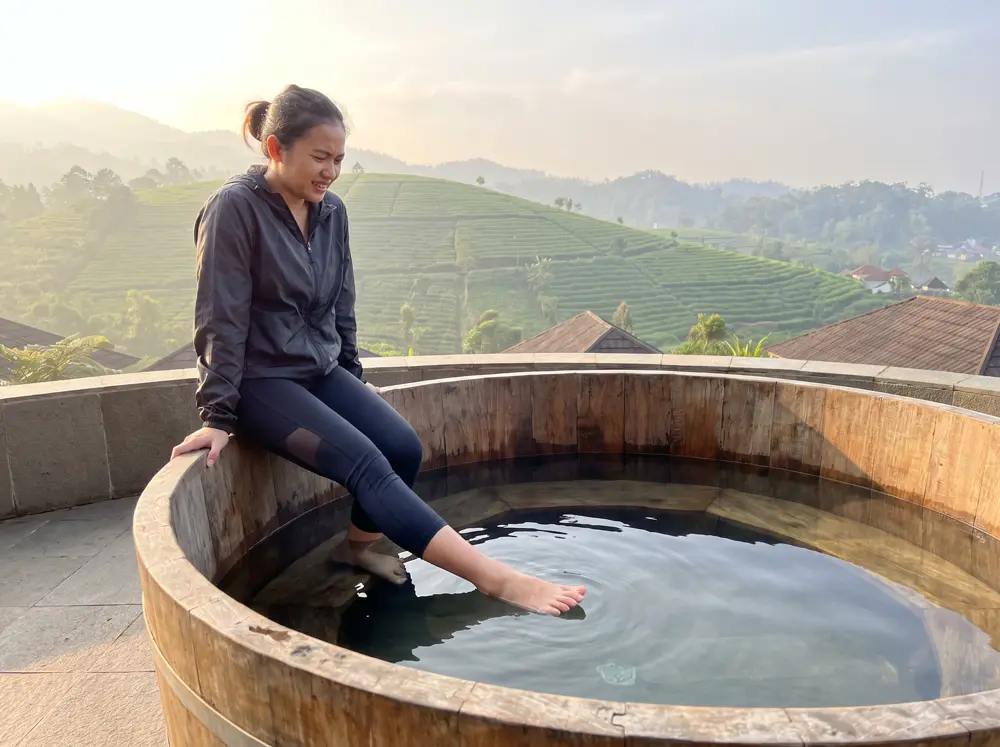
The first second your body hits 4°C water, you lose control of your breathing. Your chest locks, your mouth pulls in a huge involuntary breath, and for the next fifteen to thirty seconds all you can do is wait it out. That's the cold shock response, and it's a reflex — not a failure of nerve. Everyone gets it, including people who have done this hundreds of times. Understanding those thirty seconds is half of the real ice bath benefits story. The other half doesn't show up until twenty minutes later, when you're dry and sitting still.
We have been building ice baths in Bandung for three years — chillers, filtration, sanitation, the whole system. The pattern we see over and over: people buy for the muscle recovery claim, then keep using it for years for a completely different reason. This article explains why, including the part that rarely makes it into a brochure: the industry's headline claim is the one with the shakiest evidence behind it.
The first thirty seconds: a reflex you can't negotiate with
Water below 15°C triggers the same sequence in everybody. What changes with practice isn't the reflex — it's how fast you take back control.
| Time | What happens | What to do |
|---|---|---|
| 0–3 sec | Gasp reflex — an involuntary inhale | Enter slowly, head always above the water |
| 3–30 sec | Fast shallow breathing, skin vessels clamp down hard | Slow the breath, long exhales. This is a trainable skill |
| 30–90 sec | Breathing comes back under control, blood shifts to the core | Stay still. Movement strips the warm layer off your skin |
| 1.5–3 min | Noradrenaline release climbs and holds, skin goes mildly numb | This is the working zone. You've got the benefit by here |
| Exit +5–30 min | Blood returns to the skin, alertness and mood lift | Move gently until warm. This is the part people come back for |
One line in that table isn't advice, it's a rule: never go in head-under. The gasp reflex doesn't check whether your mouth is above or below the surface first. That's what makes cold water dangerous in a way a sauna simply isn't.
The most reliable of the ice bath benefits: the mood lift
Cold exposure triggers a noradrenaline release — the same chemistry involved in alertness and focus. Unlike caffeine, it doesn't spike and crash within the hour; many users report the effect holding for hours, with a clear-headed calm that's genuinely hard to describe before you've felt it.
Of every claim in circulation, this is the one people report most consistently, notice fastest — usually on session one — and dispute least. Ironically, it's also the one least used to sell ice baths. Across 100+ projects, the clients still using their bath six months later almost always cite this. Not their muscles.
The hedge still matters: reported, not proven. Mood effects are hard to measure objectively, and some of it could be placebo, or simply the satisfaction of having done something difficult before 8am. We don't have a problem with that — if the effect is real for you, the mechanism is a secondary question. What we do have a problem with is selling it as clinically settled.
The muscle recovery claim: here's the actual problem
This is the part usually cut from the sales deck.
Ice baths do reduce swelling and inflammation after hard training, and plenty of athletes report less soreness the next day. Nothing controversial so far.
The problem: the inflammation after resistance training isn't purely damage. Part of that inflammatory signalling is what your body uses to build bigger, stronger muscle. Some research suggests that cold water immersion immediately after strength training may blunt part of the long-term adaptation — hypertrophy and strength gains. It isn't settled, and the size of the effect is genuinely debated, but it's consistent enough that we mention it before you spend tens of millions of rupiah.
The practical takeaway isn't "don't buy an ice bath". It's a timing question.
- Training for size or strength? Don't get in within 4–6 hours of a lifting session. Use it on rest days, in the morning, or after cardio.
- Need to perform tomorrow? Tournament, back-to-back matches, two sessions a day. The blunting is irrelevant here — you're not building anything this week, you're surviving it. Cold straight after competing makes sense.
- In it for mood and clear-headedness? Your training schedule is irrelevant. Use it whenever you like.
We go further into this in ice baths for athletes. If a seller tells you an ice bath is good for everyone at every time, they haven't read the literature — or they have, and chose not to bring it up.
The most heavily marketed ice bath claim is the weakest one. The strongest one barely gets mentioned.
Dosing: how cold, how long
This is the question we get most. Short answer: colder means shorter, and there is no prize for staying in longer.
| Water temp | Typical duration | Who it's for |
|---|---|---|
| 12–15°C | 5–10 min | Week one. Enough to trigger the response, mild enough to learn in |
| 10–12°C | 3–5 min | Getting acclimatised, breathing under control |
| 5–8°C | 2–3 min | Regular users. The most common set point on our units |
| 2–5°C | 1–2 min | Experienced. Nothing extra is gained by staying longer |
Our units run a 2–8°C range and the chiller sets anywhere within it, so the beginner range lives inside the same machine — you don't buy twice. The thing to take from that table is that the duration column falls as the temperature falls. Ten minutes at 3°C is not the hardcore version of three minutes at 3°C. It's hypothermia risk with no added benefit. The full discussion of set points is in the ideal ice bath temperature.
On frequency: what we observe is that people settle at 2–4 sessions a week. We're deliberately not quoting the "magic number of minutes per week" that circulates online — it gets repeated everywhere without a clear source attached, and we're not adding to the noise.
Bandung is cool, but it is not cool enough for tap water to approach 8°C. Without a chiller you'll be chasing temperature with bags of ice every morning and still won't be consistent. A 0.5–1 HP chiller runs on a standard 220V supply, so no special electrical work is needed. The part you cannot skip is the water side: 20µm cartridge filtration plus UV or ozone. Cold water slows bacterial growth — it does not kill it. Details in ice bath water maintenance.
Finish cold, or finish warm?
This is the loudest debate on the forums and the quietest one in the data.
The case for finishing cold: if you jump straight into a hot shower, you cut off part of the metabolic response — your body stops having to warm itself, and this camp argues that's where some of the effect lives. The case for finishing warm: comfort, and if you're doing this in the evening for sleep, getting into bed shivering is not a strategy.
Our position, after 100+ projects: the evidence isn't strong enough to hand either side the win, and what beats both is consistency. The protocol you hate is the protocol you quit in week three. One genuinely local note: in a city where evenings sit at 18–20°C, "finishing cold" means shivering for a good while longer than it would at sea level. A lot of our clients here end up finishing warm, and that's a legitimate choice. It's the same position we take in our contrast therapy guide: 10–15 minutes hot, 1–3 minutes cold, 5–10 minutes rest, 2–3 rounds, and finish however you prefer.
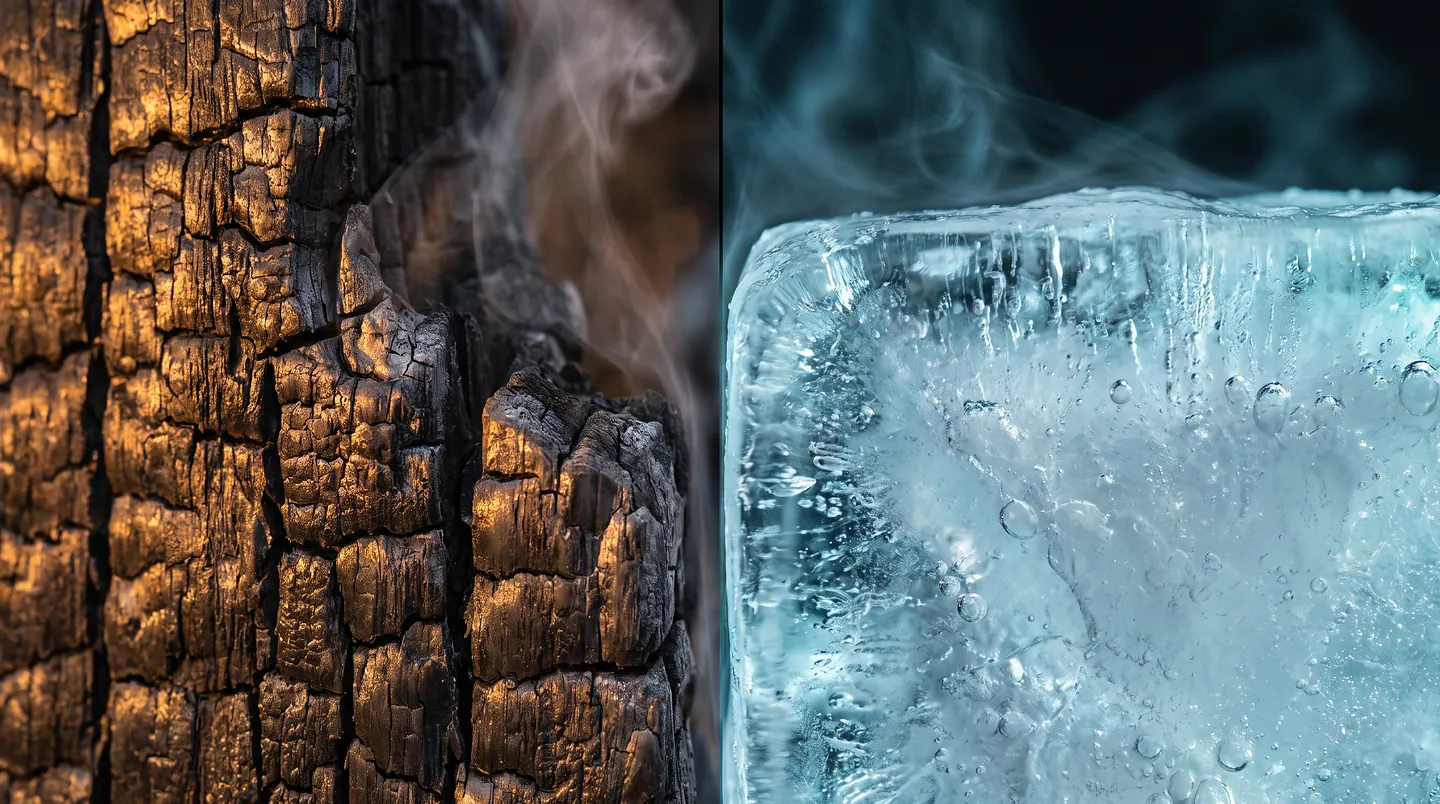
If you're coming straight out of a hot room, get in slower still — the gap is much bigger than it feels, and we cover the hot side in sauna health benefits.
Who should not get in
The cold shock response raises heart rate and blood pressure abruptly. For a healthy person, that's a load the body handles. For some people, it isn't.
Talk to your doctor before starting cold exposure if you are pregnant, have a heart condition, have uncontrolled high blood pressure, or have epilepsy. This isn't a formality: sudden cold is a far sharper trigger than gradual heat, and it acts in seconds rather than minutes.
Three rules apply to everyone, no exceptions: never alone for your first sessions, never after alcohol, and never head-under.
The short version
An ice bath gives you one thing very reliably: a lift in mood and alertness that holds for hours, noticeable from session one, reported by nearly everyone. It gives you one thing conditionally: less soreness, at a possible cost to strength adaptation if you time it wrong. And there are several things it simply doesn't give you, whatever the marketing says.
If that sounds like a smaller offer than the average brochure — it is. It's also the one we can still stand behind years from now. To see what we build, the temperature range and the engineering behind it, have a look at our ice baths and cold plunges. Site survey and 3D layout are free within Bandung.
Frequently asked questions
What temperature should an ice bath be for a beginner?
Start at 12–15°C for 5–10 minutes rather than jumping straight to 3°C. That range still triggers the cold response but leaves you room to learn breath control, which is the actual skill. After a few weeks, work down to 5–8°C and cut the duration to 2–3 minutes.
How long should you stay in an ice bath?
It depends on the temperature: colder means shorter. At 5–8°C, two to three minutes gives you almost the entire effect, and at 2–5°C one to two minutes is plenty. Staying in longer isn't a better version of the same thing — it adds risk without adding benefit.
Do ice baths really help muscle recovery?
Partly, with an important caveat. They reduce swelling and many athletes report less next-day soreness, but some research suggests immersion right after resistance training may blunt part of the long-term strength and hypertrophy adaptation. If your goal is building muscle, leave 4–6 hours between lifting and getting in.
Should you finish cold or warm up afterwards?
The evidence isn't strong enough to settle it, so pick whichever keeps you consistent. If you plunge in the morning and enjoy the slow rewarm, finish cold. If you do it in the evening or can't stand shivering for long, finish warm — you still get almost all of it.
Is an ice bath safe for everyone?
No. The cold shock response raises heart rate and blood pressure within seconds, so check with your doctor first if you are pregnant, have a heart condition, have uncontrolled high blood pressure, or have epilepsy. Three rules apply to everybody: never alone for the first sessions, never after alcohol, and never head-under.
Information on this site is educational and is not medical advice. Consult a doctor before starting heat or cold therapy.
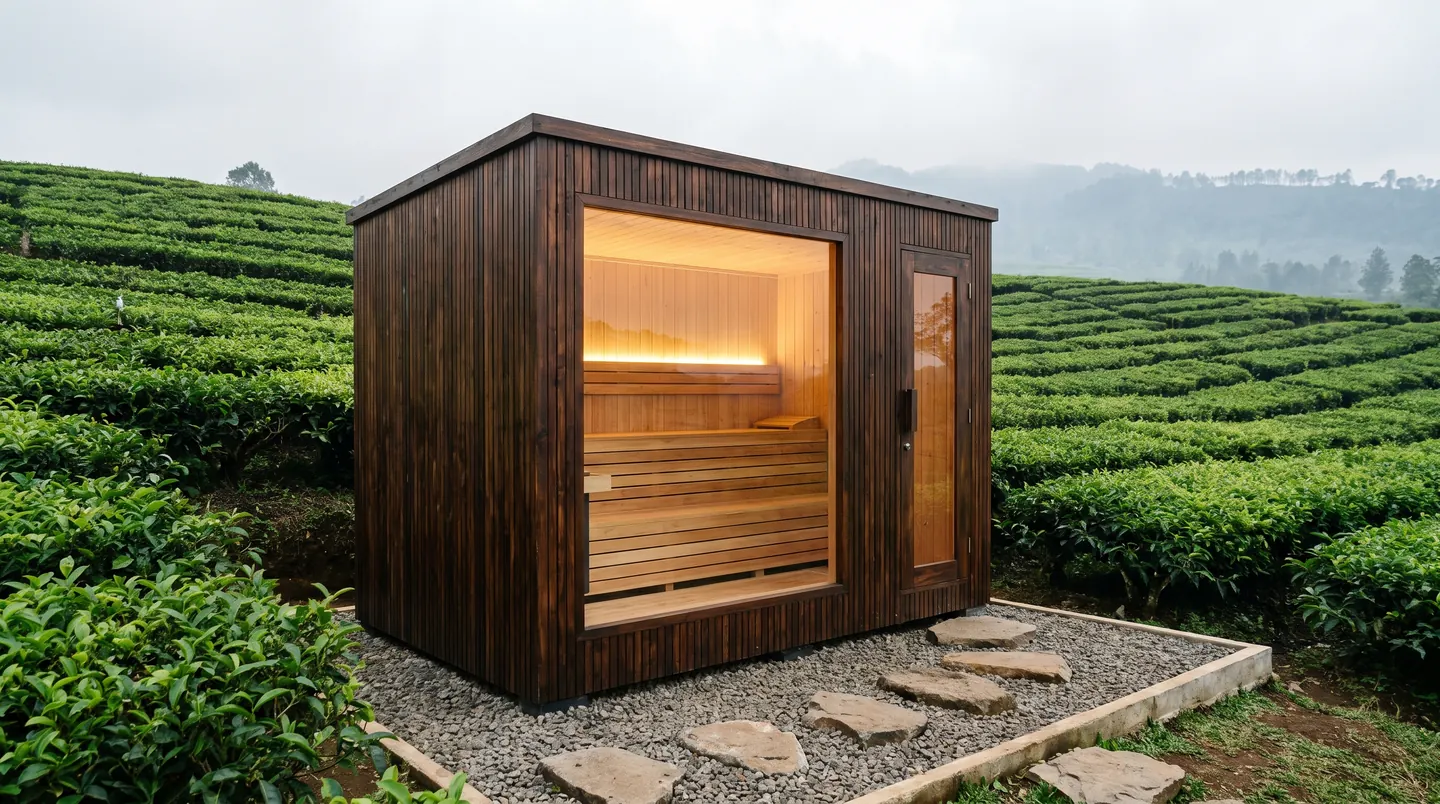
Sauna health benefits, minute by minute inside a 90°C room
Fifteen minutes at 90°C changes your heart rate, your blood flow and how you sleep that night. The biggest effect arrives after you walk out.
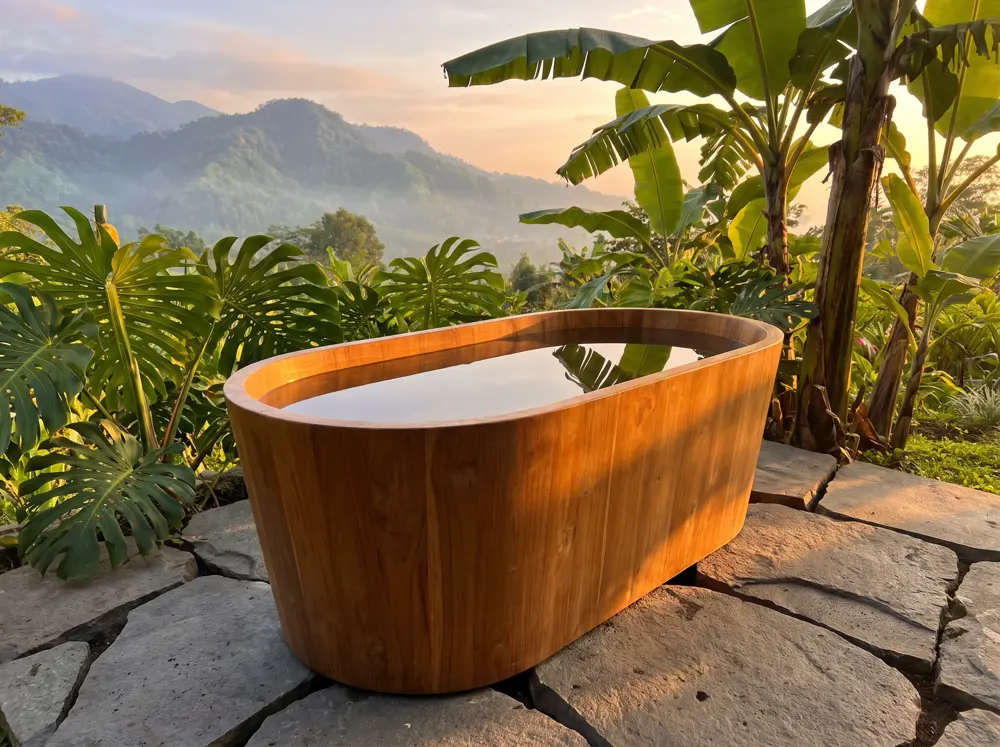
Try it with a tub and bagged ice before you think about Rp 38 million
Almost everyone still using an ice bath a year later did it the cheap, uncomfortable way first.

Which parts of a sauna forgive you, and which parts punish you
We have pulled apart DIY saunas with tidier joinery than our own workshop produces. The wall behind them was black.
Start with a free survey
We come to your place in Bandung, measure, check the power, and tell you what's possible and what isn't. No cost, no obligation.