A commercial sauna for hotels is a different machine from a home one
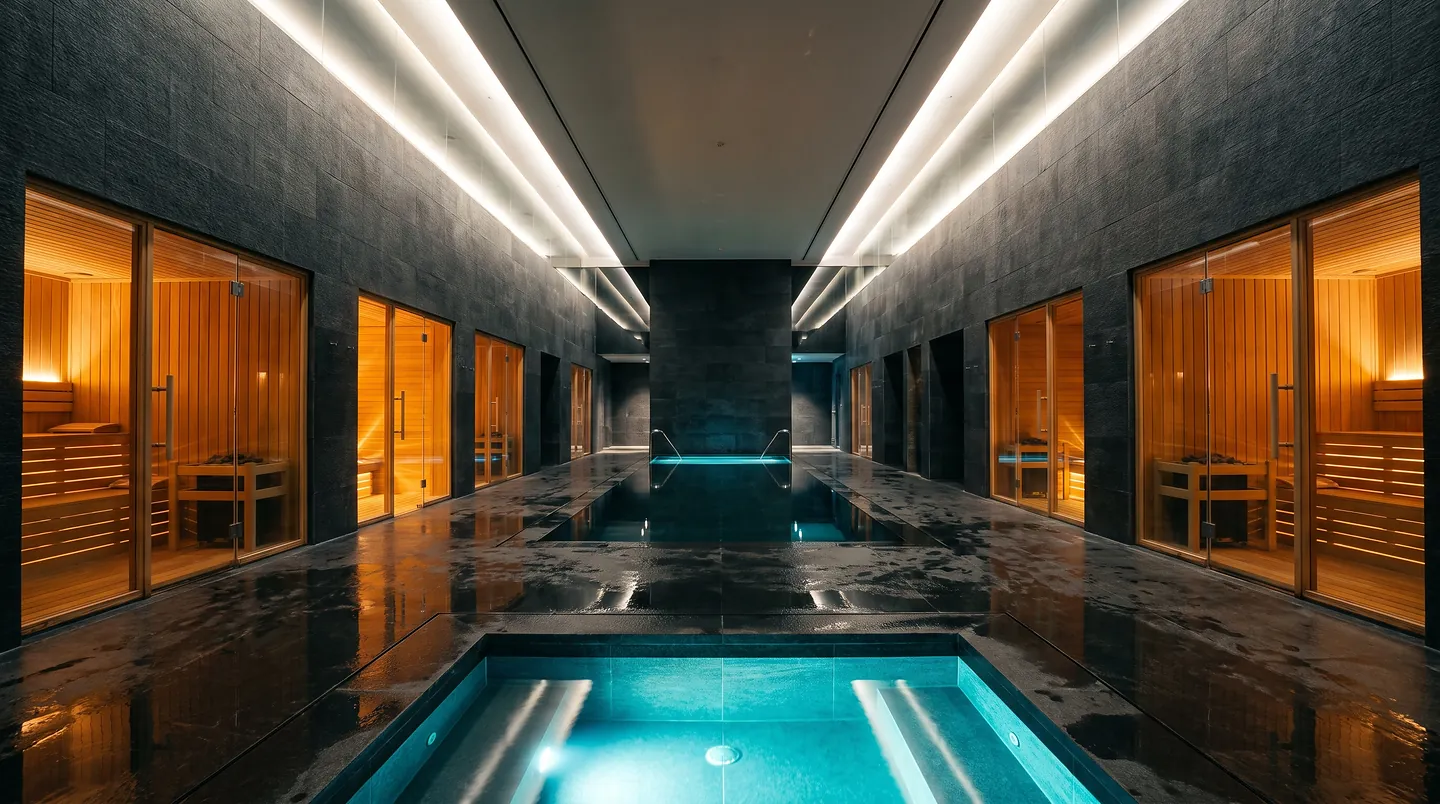
An 8 kW heater in a home sauna runs about three hours a week. The identical heater, installed as a commercial sauna for hotels up in Dago, comes on at 06:00 and off at 22:00 — sixteen hours a day, every day. Run the year: 150 hours at home against 5,840 in your property. Nearly forty times. That isn't trivia; it is why a commercial sauna is a different machine, not a home one made bigger.
We have built both in Bandung for three years, and the expensive mistake always has the same shape. A GM reads "8 kW heater" on two quotes and takes the one that's twenty million cheaper. Eight months later the element has been replaced twice, the contactor has welded shut, the benches have cupped. On paper the specs matched. The duty cycle didn't.
Duty cycle: the number that drags every other spec with it
Duty cycle is what share of those "on" hours the heater actually pulls full load. At home: 30–40 minutes of warm-up at 100%, a light cycle holding 80–95°C for an hour, then off until next weekend. In a hotel: one warm-up, then holding all day while the door opens forty times. Every opening dumps 90°C air out and lets 20°C Bandung air in, and the heater chases it back. A hotel sauna isn't only on longer — each hour is heavier. Everything else follows.
| Item | Home sauna | Commercial sauna (hotel / gym) |
|---|---|---|
| Powered hours per year | ≈ 150 | ≈ 5,800 |
| Heater | 6–9 kW, standard watt density | Low watt density, larger body, same kW |
| Contactor | Residential grade | High operation rating, a service item |
| Over-temperature protection | In the controller | Independent mechanical cut-out, manual reset |
| Controller | Dial inside the room | Panel outside, locked setpoint, on-timer |
| Benches | 28 mm slats, ≈ 600 mm supports | 42 mm slats, ≈ 400 mm supports, liftable |
| Wood | Cedar (scent, looks) | Thermo-aspen (survives cleaners) |
| Floor | Timber or vinyl | Sealed tile, falls to a floor drain |
| Ventilation sized on | Room volume | Peak occupancy, not m³ |
| Heater stones | Replace every 2–3 years | Replace every 6–12 months |
| Maintenance | When remembered | Scheduled contract, log |
Heaters: what changes in a commercial sauna for hotels
The element. Element life is measured in operating hours, not years, so the element that lasts a decade in a villa is consumed in months on your property. The fix isn't clever: lower watt density for the same total power — a bigger body, more elements, each working less hard. A commercial heater looks oversized. That's the point.
The contactor. The most overlooked component, and the one that most often kills a commercial sauna. It's the switch that makes and breaks the load every time the thermostat calls for heat, and it has a mechanical life — some hundreds of thousands of operations, then it's done. At home that is never reached. In a hotel, with the door constantly opening and the thermostat cycling tight, a residential contactor can be gone in a year. The failure mode is the bad one: the contacts don't open, they weld, and the controller can no longer switch off the heater.
An independent over-temperature cut-out. Precisely because a contactor can fail welded, you need a second layer that doesn't share those electronics: a mechanical thermal cut-out that physically breaks the supply and is reset by hand. If you take one line from this article into a procurement meeting, make it this one.
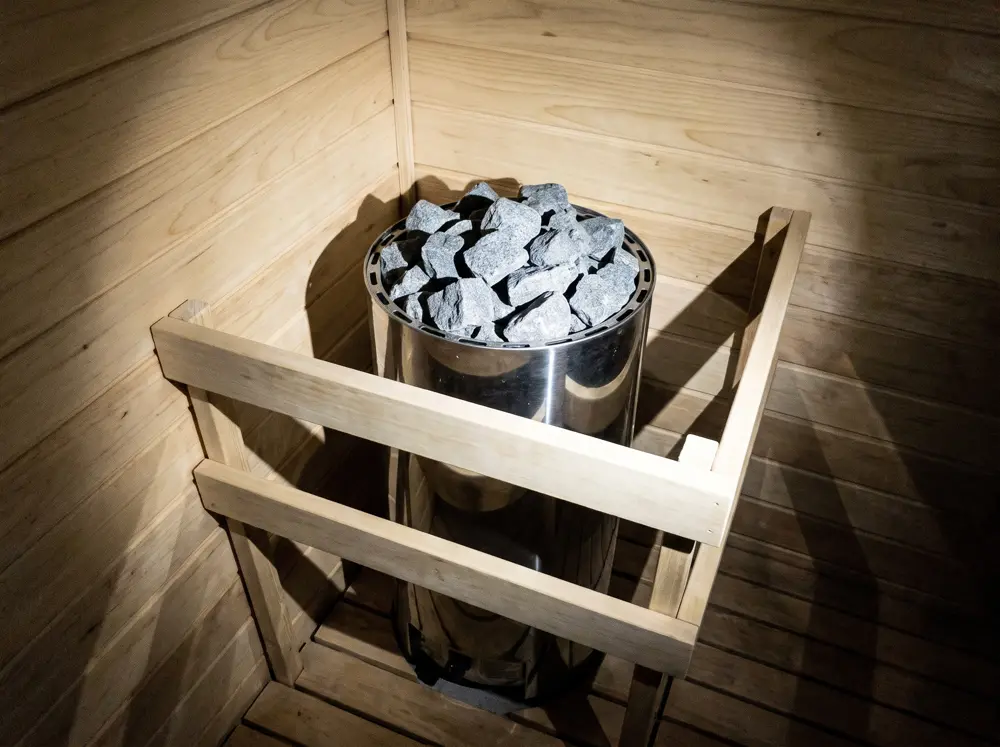
Controllers: timer, schedule, lockout
A home controller has a dial inside the room. A hotel guest turns that dial to maximum, every time, without exception. A commercial controller solves three problems:
- Panel outside. The setpoint is locked at 85–90°C by a technician, not by each guest.
- Maximum-on timer. The heater kills itself after a set duration, including when staff forget.
- Scheduling. On at 05:30, ready at 06:00, off at 22:00. Without it, the sauna is on because nobody remembered to switch it off.
If the property has a BMS, specify a volt-free contact or Modbus so the front desk can shut it down from reception — cheap asked for early, expensive once the walls are closed. Same for the electrical supply: a 6–9 kW heater needs a dedicated three-phase run, decided before the ceiling goes up.
Benches that survive forty people a day
Home benches carry two bodies a few hours a week. Hotel benches carry forty wet bodies a day, plus a 20°C → 90°C → 20°C cycle daily, plus housekeeping with a cloth and disinfectant. What changes:
- Slats from 28 mm to 42 mm, supports from roughly 600 mm to 400 mm. It's the repeated flex, not the load, that cups a board.
- Bench tops lift out without tools. If staff can't clean underneath, underneath never gets cleaned.
- No visible screw heads — metal at 90°C burns skin. Fasteners go in from below in A4/316 stainless; galvanised rusts and stains timber within a season.
On wood, taste and operations collide. Cedar smells wonderful, and for a home we often recommend it. For a hotel we steer to thermo-aspen, which doesn't go pale and fuzzy after a year of chlorine-based cleaners. Cedar will — the long version is in our sauna wood guide. Flooring is the bluntest divide: a commercial sauna gets sealed tile falling to a drain, because if the floor can't be hosed, within six months you will smell the reason.
Ventilation is sized on people, not on cubic metres
For a home sauna we size ventilation on volume: so many air changes per hour. For a commercial sauna that misleads you, because CO₂, moisture and odour don't come from the room — they come from the people in it. A 12 m³ room with two people and one with ten need very different fresh air rates despite identical cubic metres. So we size on peak occupancy.
Bandung adds a factor. At 750 m with 18–20°C evenings and high humidity, incoming air carries more water than a Jakarta assumption suggests. The vapour barrier and moisture path must be right from the start, because fixing them means opening walls — not turning a dial.
We size mechanical extract on the peak occupancy printed on your door sign, not on the maximum number of bodies you could physically fit inside. That sign becomes the design figure. Raise capacity later without telling us and the ventilation no longer matches — which nobody notices until a guest complains of feeling lightheaded.
Accessibility, signage, and the part that makes you liable
- The door opens outward, no lock, no latch. Always.
- A glass panel so staff can look in without opening the door.
- A lower bench you can step onto rather than climb, and a grab rail at the entry.
- Bilingual signage: temperature, maximum session length, no alcohol, no towels on the heater, children supervised.
The sign is also where your health language has to be precise. Sauna research is genuinely interesting and many guests report feeling relaxed and sleeping better, but a sauna door is no place for claims. What it needs is the opposite: a line asking guests who are pregnant or have heart conditions, uncontrolled blood pressure, or epilepsy to talk to a doctor first. That protects them, and you.
The honest business case
We build saunas; we are not revenue consultants. So we won't hand you an ADR uplift figure, because anyone who does is making it up. The good side is real: a wellness area shows up in your photos and in the text of guest reviews, and separates you from the hotel next door with the identical pool. For a gym, a sauna and an ice bath are why people renew. The cost side is just as real:
- Electricity. Check the arithmetic yourself: 8 kW × 16 hours × roughly 45% average duty ≈ 58 kWh a day, about 1,700 kWh a month. Multiply by your commercial PLN tariff — we won't guess your rate.
- Staff time. Around 20 minutes daily, plus a weekly deep clean.
- Consumables. Stones, elements, bench oil.
The most money-saving recommendation we give GMs is always resisted before it's adopted: don't run sixteen hours. Practically nobody uses a hotel sauna at 13:00. Schedule 06:00–10:00 and 16:00–22:00, and the bill drops close to half without one guest noticing.
A sauna running all day for 30% occupancy isn't an amenity. It's a very expensive room heater.
The maintenance contract: the first line people cut
A commercial sauna without a written maintenance schedule will fail; the only question is when. Our minimum: re-torque element terminals quarterly, because thermal cycling loosens them; inspect the contactor; actually trip the over-temperature cut-out rather than looking at it; replace stones every 6–12 months; sand and re-oil benches annually with paraffin oil, never varnish. Every visit leaves a written log — no log, no evidence of maintenance when you most need it. On the cold side, ice bath water runs a daily schedule.
Numbers, and what happens next
For reference, our dry saunas start at Rp 68,000,000 for 2–3 people and a full wellness area with sauna and ice bath at Rp 145,000,000. Commercial work we quote per project after a survey, because peak occupancy, the electrical run and your floor drain decide more than floor area does. The complete ranges sit on the pricing page.
Free site survey and 3D layout within Bandung, lead time 3–6 weeks, 2-year structural warranty. If you're weighing up the numbers above, bring us your floor plan — and if the room doesn't suit, we'll tell you straight.
Frequently asked questions
How much does a commercial sauna for a hotel cost?
There is no single figure, because the scope is set by peak occupancy, the electrical run and the floor works. As a reference point, a 2–3 person dry sauna starts at Rp 68,000,000 and a full wellness area with an ice bath starts at Rp 145,000,000. Commercial projects are quoted after a survey, and surveys within Bandung are free.
How many hours a day should a hotel sauna run?
Fewer than you think. Almost nobody uses a hotel sauna in the middle of the day, so two scheduled blocks such as 06:00–10:00 and 16:00–22:00 usually cover all real demand while cutting the electricity bill close to half. A controller with automatic scheduling makes that happen without depending on staff memory.
Does a commercial sauna need three-phase power?
A 6–9 kW heater needs a dedicated three-phase run or a heavy single-phase one, and for commercial property we almost always steer to three-phase. It isn't only about capacity; it's about load balance and contactor sizing. This decision has to be made before the ceilings and walls close up.
How long does a commercial sauna heater element last?
Element life is counted in operating hours rather than years, so a sauna running 5,800 hours a year consumes them far faster than a home unit running 150. A commercial heater with low watt density stretches that life considerably, and scheduling operating hours stretches it further. Treat elements as a budgeted consumable, not a surprise.
What signage and safety equipment does a hotel sauna need?
At minimum: a door that opens outward with no lock, a mechanical over-temperature cut-out independent of the controller, a maximum-on timer, and bilingual signage covering temperature, recommended maximum session length, no alcohol, and child supervision. The sign should also ask guests who are pregnant or have heart conditions, uncontrolled blood pressure, or epilepsy to consult a doctor first.
Information on this site is educational and is not medical advice. Consult a doctor before starting heat or cold therapy.
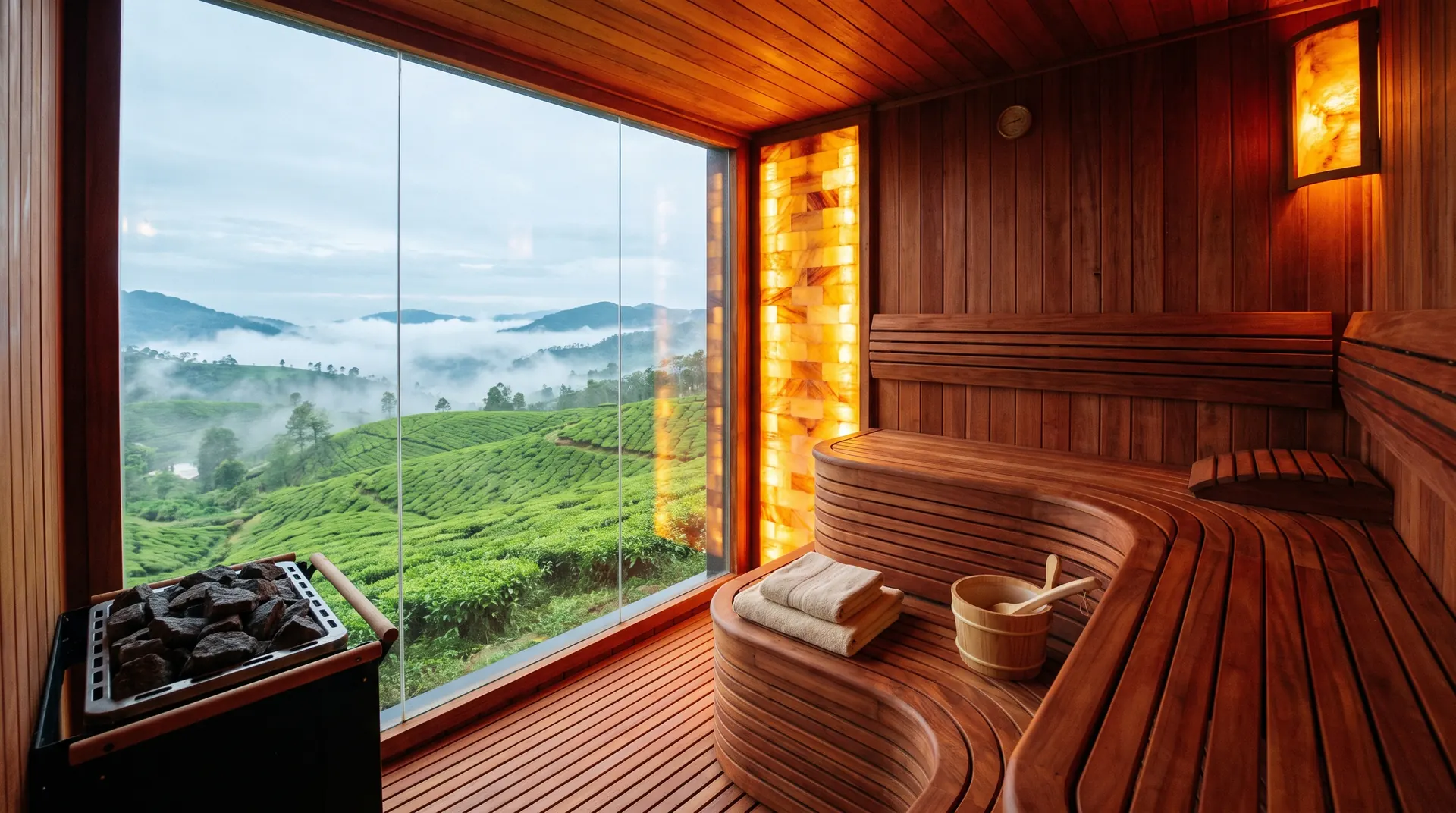
Stop sizing your sauna by floor area
Two saunas, identical floor plan, identical heater. One works. The difference is 55 cm of ceiling.
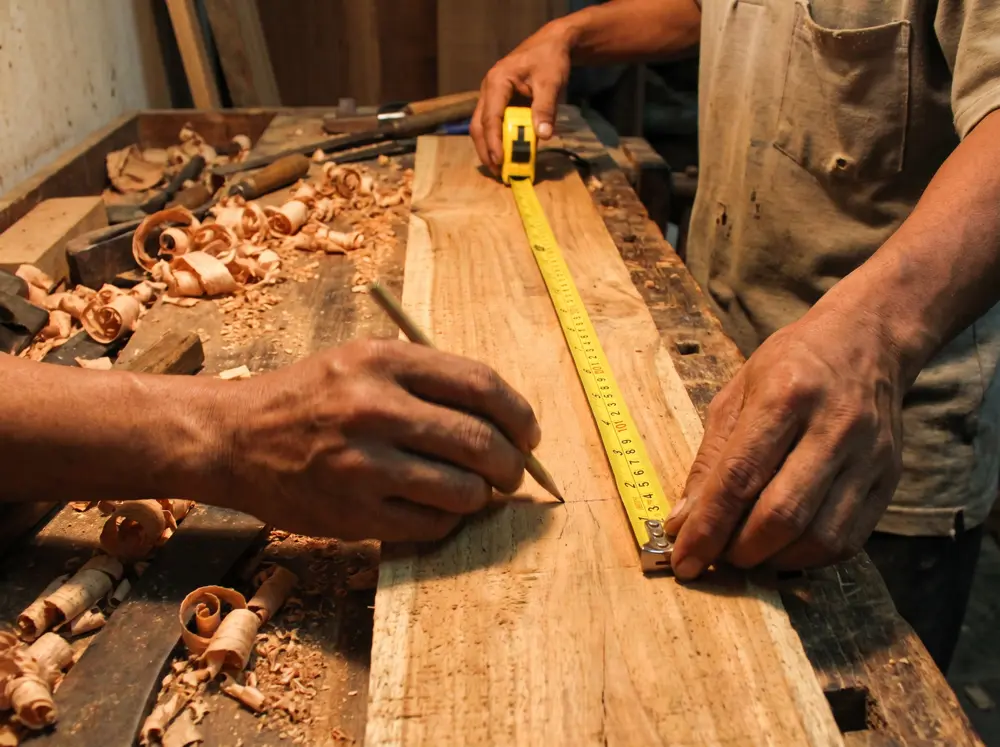
Sauna wood is chosen with physics, not with taste
A 90°C bench doesn't burn you. A 90°C screw head does. That gap is the whole argument about wood.
What sits inside a Rp 68 million sauna, line by line
Budgets rarely blow up over the timber. They blow up over one line that appears in no brochure: your electrical panel.
Start with a free survey
We come to your place in Bandung, measure, check the power, and tell you what's possible and what isn't. No cost, no obligation.